
- Resources
- Blog & Insights
Blog & Insights
Practical Ideas for Better Scheduling. Explore articles, tips, and insights on scheduling, flow, production management, and industry trends.
Practical Thinking for Better Scheduling
Explore articles, tips, and prospectives on construction scheduling, production flow, and improving project reliability. From tactical job-site ideas to broader planning concepts, out goal is simple: help teams build more predictable projects.
New ideas. Practical guidance. Continuous improvement
inTakt
May 12, 2026
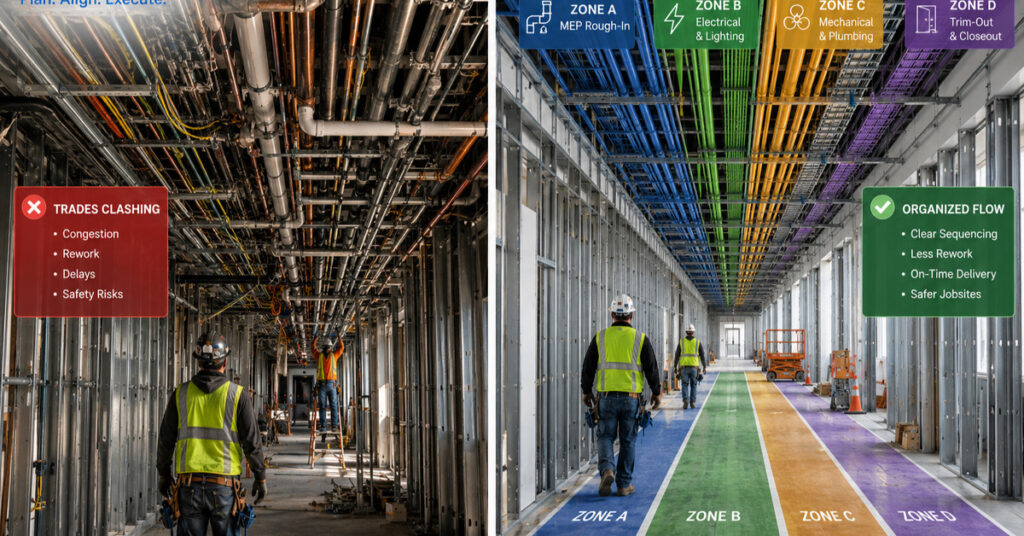
The Coordination Problem Slowing Down Your Data Center Build
Data center projects don’t fail because of one big issue. They fail because of coordination breakdowns. Electrical, mechanical, and plumbing systems all need to be installed in tight, shared spaces. Each trade depends on the one before it. When that sequence breaks, everything slows down. A cable tray install gets delayed. That pushes mechanical. That blocks another trade. Suddenly, an entire zone is out of sync. Traditional schedules don’t capture this level of dependency. They show…
inTakt
May 6, 2026
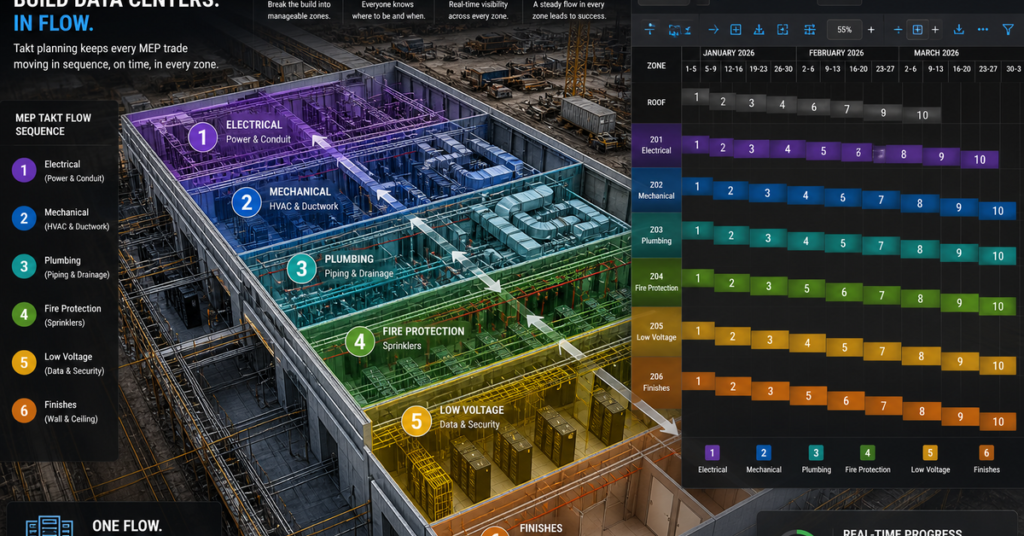
Why Data Center Projects Break Traditional Schedules
Data center construction doesn’t behave like a typical project. The timelines are tighter. The systems are more complex. And the margin for error is almost zero. Yet many teams still rely on traditional construction scheduling software to manage it. That’s where the problem starts. Data centers are driven by dense MEP coordination, strict sequencing, and limited access zones. Multiple trades need to work in the same areas—but not at the same time. When schedules don’t reflect that reality,…
inTakt
May 6, 2026
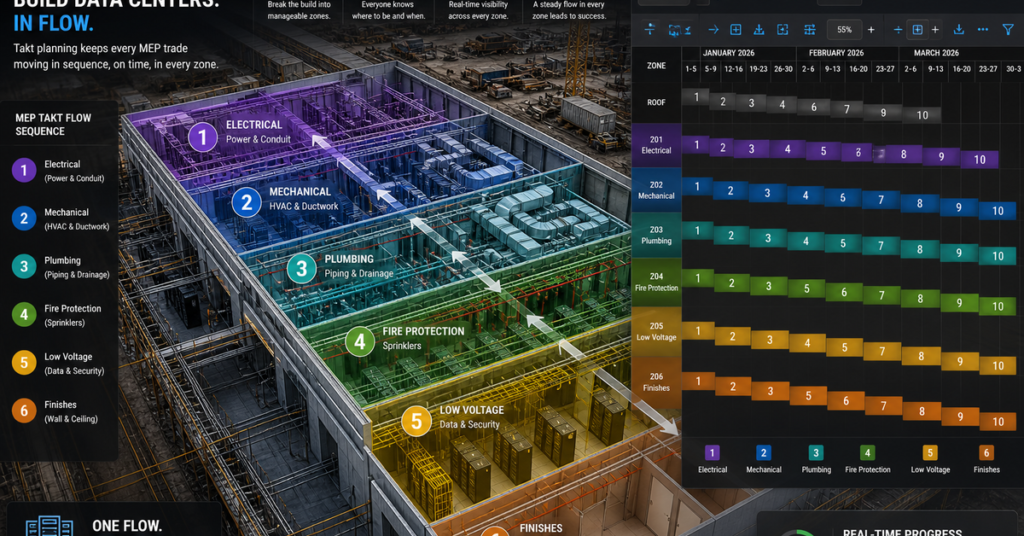
Why Data Center Projects Break Traditional Schedules
Data center construction doesn’t behave like a typical project. The timelines are tighter. The systems are more complex. And the margin for error is almost zero. Yet many teams still rely on traditional construction scheduling software to manage it. That’s where the problem starts. Data centers are driven by dense MEP coordination, strict sequencing, and limited access zones. Multiple trades need to work in the same areas—but not at the same time. When schedules don’t reflect that reality,…
inTakt
May 5, 2026
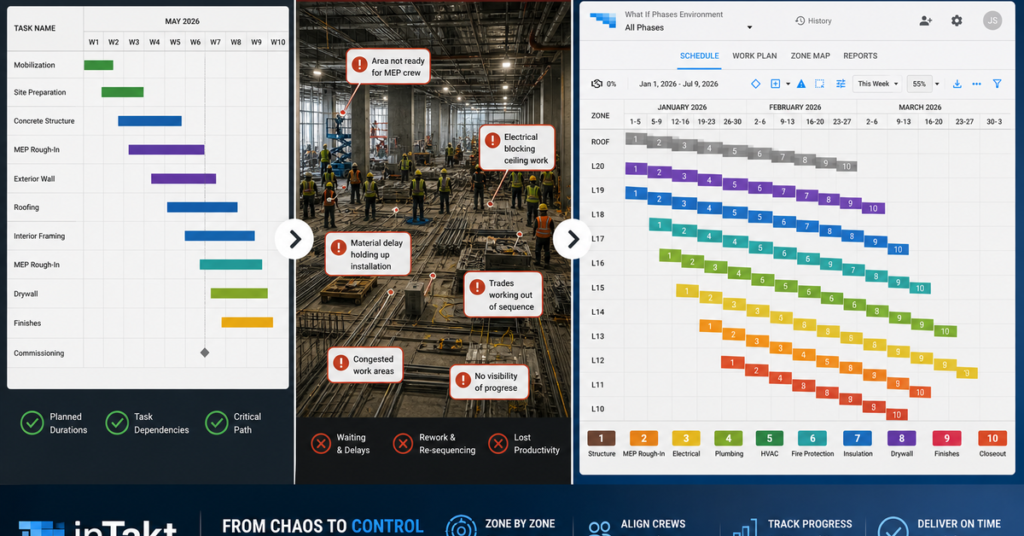
Why Your Schedule Looks Good on Paper but Fails in Reality
On paper, everything lines up. Tasks are sequenced, timelines are defined, and deadlines look achievable.But once the project starts, things begin to break down. Crews arrive and can’t start. Areas aren’t ready. Work overlaps in ways that weren’t planned. Suddenly, a “perfect” schedule turns into constant firefighting. The issue isn’t that the schedule was wrong—it’s that it wasn’t built for reality. Traditional construction scheduling software focuses on tasks and durations. But construction…
inTakt
May 4, 2026
The Real Reason High-Rise Projects Lose Momentum
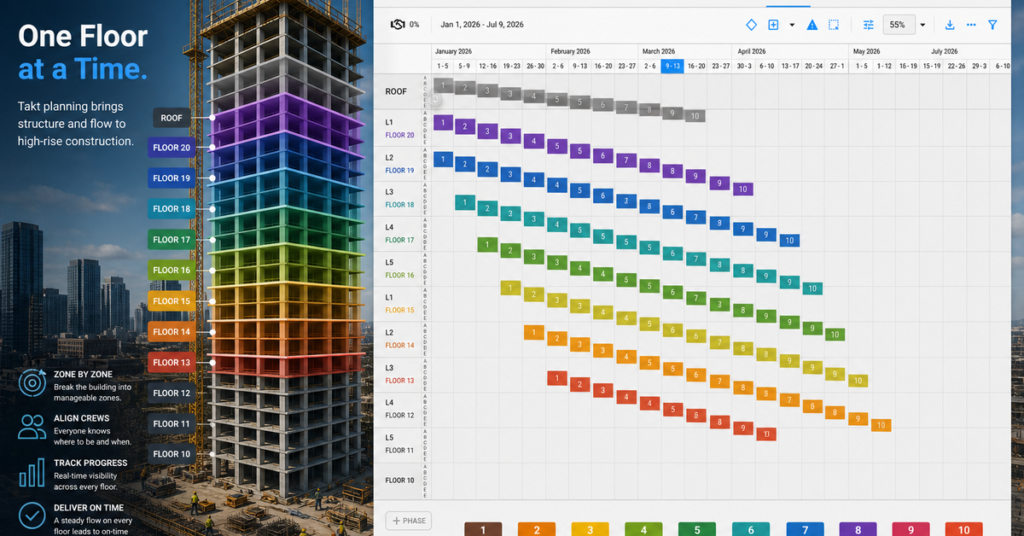
High-rise construction is all about vertical movement. But that’s also where things go wrong. As crews move floor to floor, small delays start stacking. One trade falls behind, and suddenly multiple levels are out of sync. The higher the building goes, the harder it becomes to recover. Traditional schedules don’t handle this well. They don’t control how work flows vertically or how trades interact across floors. So teams end up constantly adjusting instead of progressing. Takt planning…
inTakt
April 30, 2026
How Construction Teams Eliminate Chaos with Collaborative Scheduling
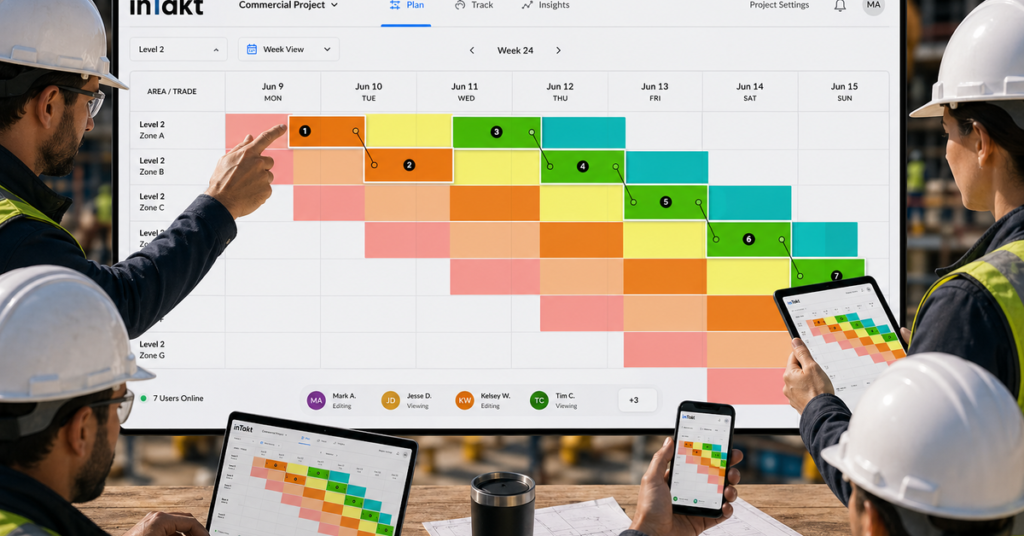
Chaos on a construction project doesn’t usually come from complexity—it comes from disconnection. When teams plan separately, update separately, and communicate separately, the project starts to break down. Collaborative scheduling changes that completely. Instead of each role working in isolation, everyone contributes to the same plan. Supers, PMs, foremen, and trade partners are aligned from the start and stay aligned as the project evolves. The difference is immediate. Conversations become…
More Than Logic. Built for Production.
Traditional CPM tools manage activities and relationships. If you run full Takt, you’ll love it! If you run traditional CPM, you’ll wonder why your software never did this before.