How inTakt supports logistical flow

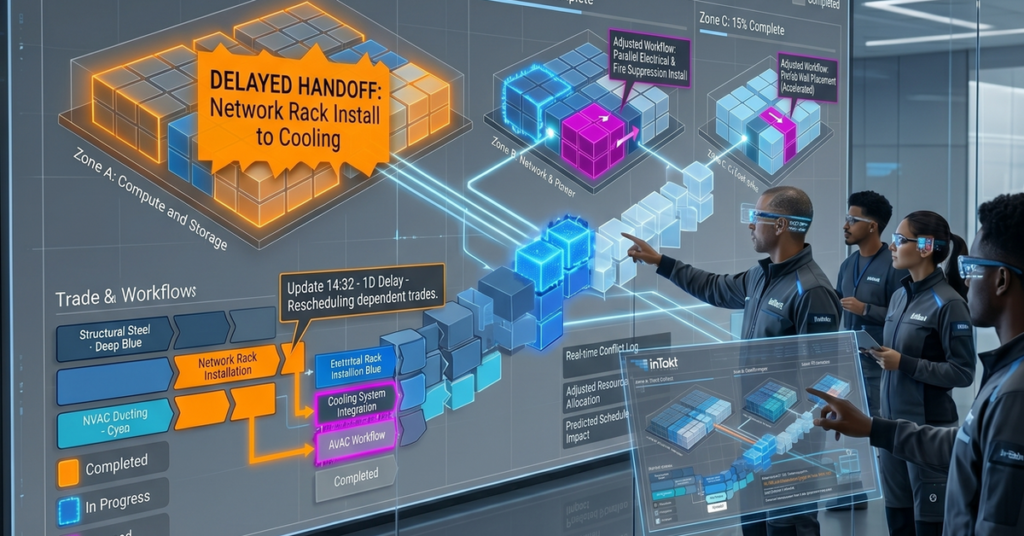
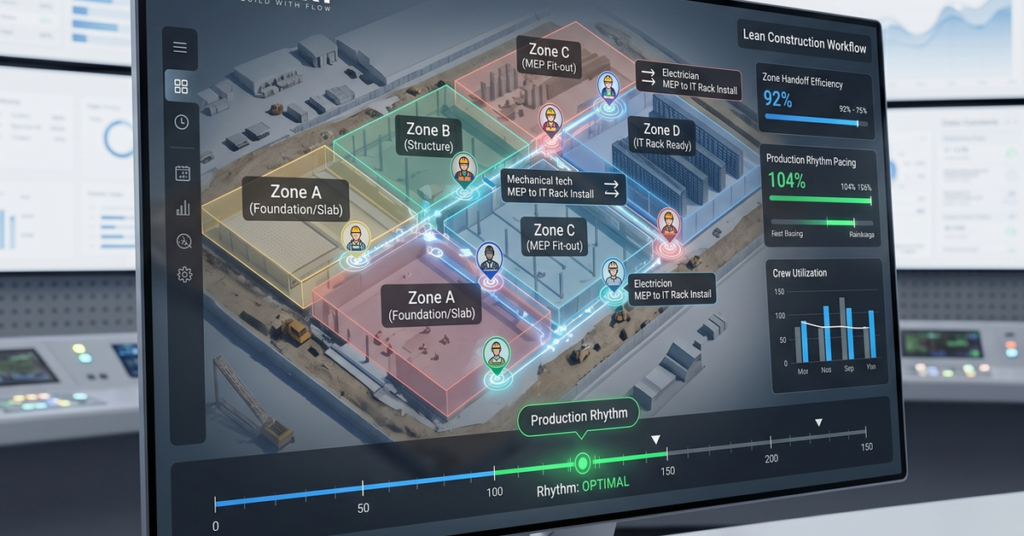
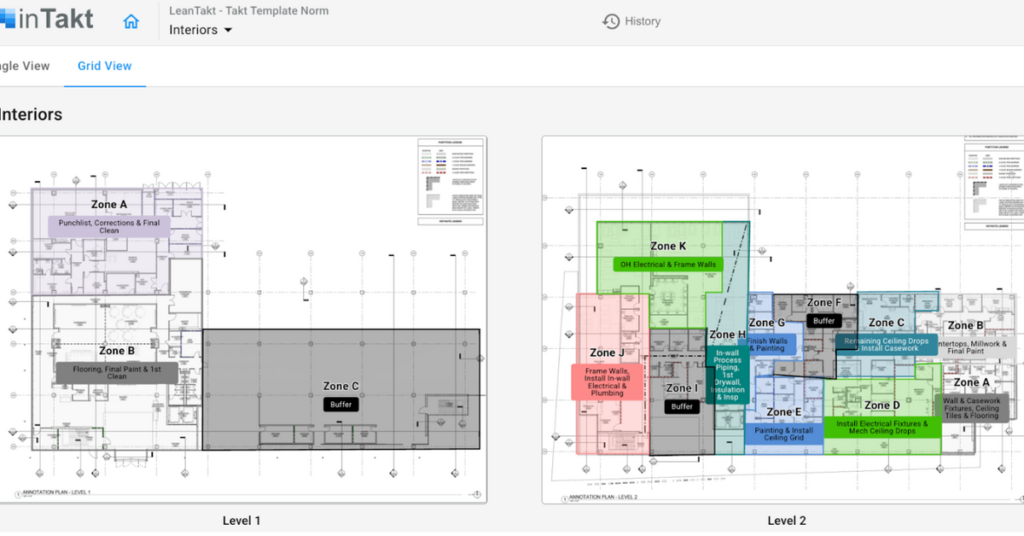
inTakt helps teams see logistics in the same place they see the work. The schedule view makes sequencing and timing visible, and the Zone Map connects that flow to the drawings. Instead of arguing about what should be happening in an area, teams can look at the zones and see what work is planned and when, then align access, staging, inspections, and deliveries around that reality.

When logistics break down, the worst thing you can do is let the issue stay invisible. inTakt gives teams a place to log roadblocks and track what is stopping progress so problems do not hide in texts, side conversations, or someone’s notebook. Once blockers are visible, leadership can remove them faster and trade partners can plan around them with honesty.

Logistical flow also depends on learning. If the same reason keeps showing up, the team needs to treat it as a system issue, not a one time excuse. inTakt prompts for delay reasons when tasks inside the active working window are pushed, and those reasons roll up into reporting so the team can see trends like inspections, material delays, labor availability, or access constraints. That is how logistics gets better week after week, not just louder.

When the plan, the zones, and the blockers are connected, the project stops reacting late. It starts making space for the work ahead of time. That is logistical flow, and it is one of the fastest ways to protect trade flow without burning out the team.
Share

Recent Posts

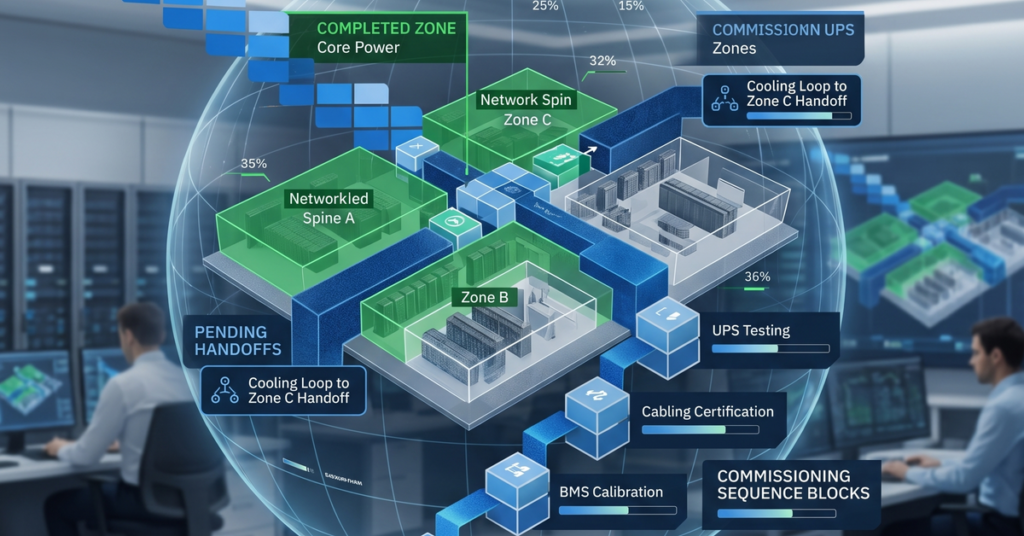
Data center commissioning zone map showing completed zones, pending handoffs, and commissioning sequence blocks

inTakt

June 5, 2026

How Takt Planning Supports Faster Data Center Commissioning

Commissioning is one of the most critical phases of data center construction. It is also one of the most schedule-sensitive. By the time a project reaches commissioning, every upstream delay matters. Incomplete rooms, missing equipment, unfinished systems, failed inspections, or unresolved punch items can all slow down testing and turnover. The problem usually begins earlier. If construction work does not flow properly through the building, commissioning teams inherit the consequences….

inTakt

June 4, 2026

Why Data Center Construction Needs Real-Time Schedule Visibility

Data center projects change quickly. A delivery shifts. A room is not ready. A trade finishes early. A commissioning activity reveals an issue. A constraint appears in a critical area. When that happens, teams need visibility immediately. Traditional schedules often lag behind field reality. By the time updates are collected, reviewed, entered, and redistributed, the jobsite may have already moved on. That delay creates confusion. Some teams work from the old plan. Others work from verbal…

inTakt

June 3, 2026

How Lean Construction Planning Improves Data Center Delivery

Data centers demand predictable delivery. But predictability is difficult when teams rely only on traditional scheduling methods. These projects include complex systems, aggressive deadlines, high-quality expectations, and many specialized trade partners. Every delay creates a chain reaction. Lean construction planning helps teams reduce that uncertainty. Instead of focusing only on task completion, lean planning focuses on workflow reliability. The goal is to reduce waste, improve handoffs,…

More Than Logic. Built for Production.

Traditional CPM tools manage activities and relationships. If you run full Takt, you’ll love it! If you run traditional CPM, you’ll wonder why your software never did this before.