Most important things you need to know about procurement

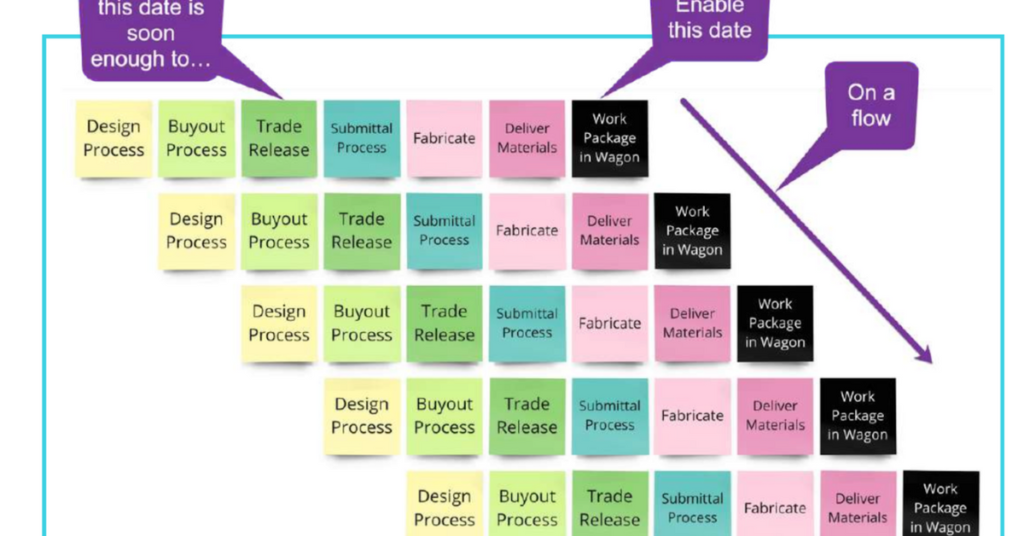
The first thing to know is that lead times are rarely managed with discipline. Teams often plan based on optimistic vendor promises instead of verified durations with buffers. Good procurement is not about believing the fastest date. It is about knowing the real date, tracking it, and acting early when risk shows up.

The second thing is ownership. Procurement tasks need clear owners and clear handoffs, just like field work. Submittals, reviews, fabrication releases, shipping, and receiving all pass between people. If no one can say who owns the next step today, it will drift until it becomes urgent.

The third thing is visibility. Procurement dates that live outside the schedule are easy to ignore until the install is near. When procurement is tracked inside a connected workflow, the need by date becomes the language of urgency. In inTakt, the need by date can be calculated dynamically from the lock line and durations, or driven directly by the start of the impacted installation task, which keeps procurement aligned with the real plan.

The fourth thing is learning. If material delays keep showing up as variance reasons, that is not bad luck, it is a pattern. Variance reporting and reason tracking help teams see whether the issue is vendor performance, late approvals, design churn, or internal decision making. Once you can see the pattern, you can fix the system, not just chase the next late delivery.

Procurement is not a side process. It is part of production. Treat it like production and it will protect the field. Treat it like paperwork and it will punish the field.
Share

Recent Posts

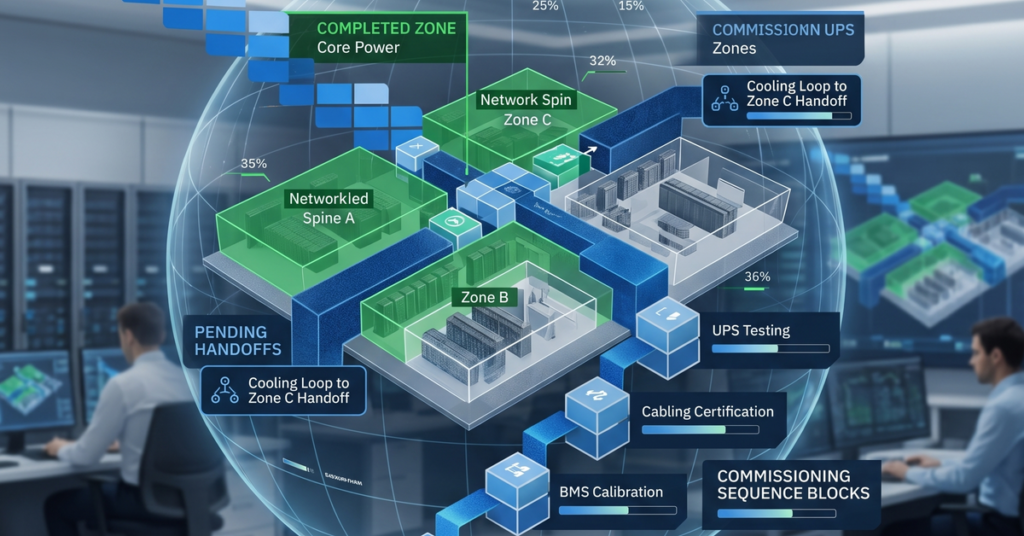
Data center commissioning zone map showing completed zones, pending handoffs, and commissioning sequence blocks

inTakt

June 5, 2026

How Takt Planning Supports Faster Data Center Commissioning

Commissioning is one of the most critical phases of data center construction. It is also one of the most schedule-sensitive. By the time a project reaches commissioning, every upstream delay matters. Incomplete rooms, missing equipment, unfinished systems, failed inspections, or unresolved punch items can all slow down testing and turnover. The problem usually begins earlier. If construction work does not flow properly through the building, commissioning teams inherit the consequences….

inTakt

June 4, 2026

Why Data Center Construction Needs Real-Time Schedule Visibility

Data center projects change quickly. A delivery shifts. A room is not ready. A trade finishes early. A commissioning activity reveals an issue. A constraint appears in a critical area. When that happens, teams need visibility immediately. Traditional schedules often lag behind field reality. By the time updates are collected, reviewed, entered, and redistributed, the jobsite may have already moved on. That delay creates confusion. Some teams work from the old plan. Others work from verbal…

inTakt

June 3, 2026

How Lean Construction Planning Improves Data Center Delivery

Data centers demand predictable delivery. But predictability is difficult when teams rely only on traditional scheduling methods. These projects include complex systems, aggressive deadlines, high-quality expectations, and many specialized trade partners. Every delay creates a chain reaction. Lean construction planning helps teams reduce that uncertainty. Instead of focusing only on task completion, lean planning focuses on workflow reliability. The goal is to reduce waste, improve handoffs,…

More Than Logic. Built for Production.

Traditional CPM tools manage activities and relationships. If you run full Takt, you’ll love it! If you run traditional CPM, you’ll wonder why your software never did this before.