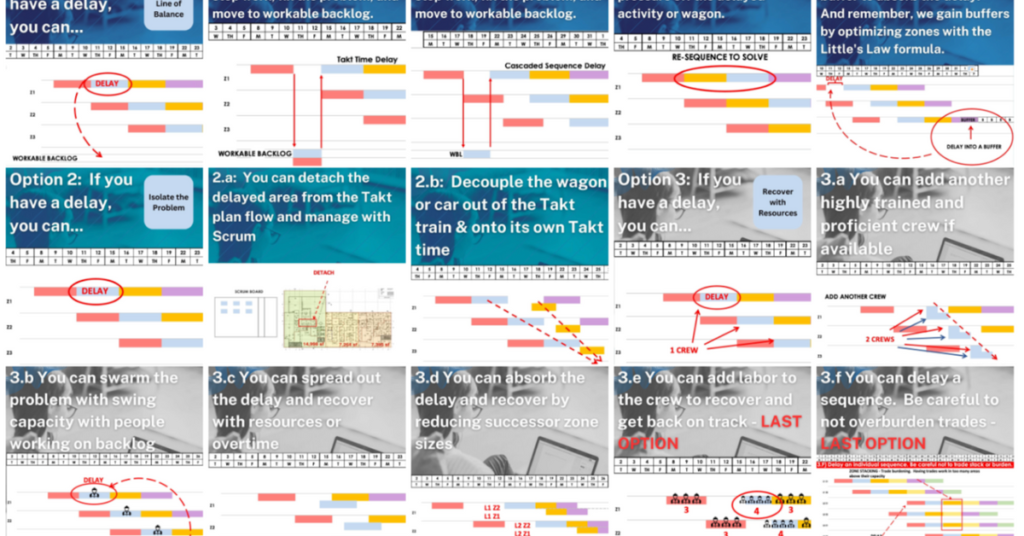
The first strategy is identifying constraints early. Many delays begin with missing prerequisites such as materials, approvals, or access. Strong look ahead planning helps teams identify these issues weeks in advance so they can be resolved before work stops.
The second strategy is protecting trade flow. When one area is blocked, the temptation is to send crews everywhere else to stay busy. While that may keep people working, it often creates partial completion and rework later. Maintaining a structured sequence helps prevent the schedule from becoming chaotic.
The third strategy is improving communication across the team. Delays become more damaging when information moves slowly. When the entire team shares the same plan and understands where work is happening next, adjustments can be made faster and coordination becomes easier.
Tools like inTakt help teams track roadblocks, update schedules in real time, and keep everyone aligned on the current plan. That visibility allows teams to respond quickly instead of discovering delays too late.
Delays will always exist, but strong planning systems help teams absorb disruption and keep projects moving forward.