Category: Takt Plan Applies to Every Type of Building

Explore articles, tips, and prospectives on construction scheduling, production flow, and improving project reliability. From tactical job-site ideas to broader planning concepts, out goal is simple: help teams build more predictable projects.

New ideas. Practical guidance. Continuous improvement

inTakt

May 29, 2026

The Scheduling Challenge Behind Stadium Construction

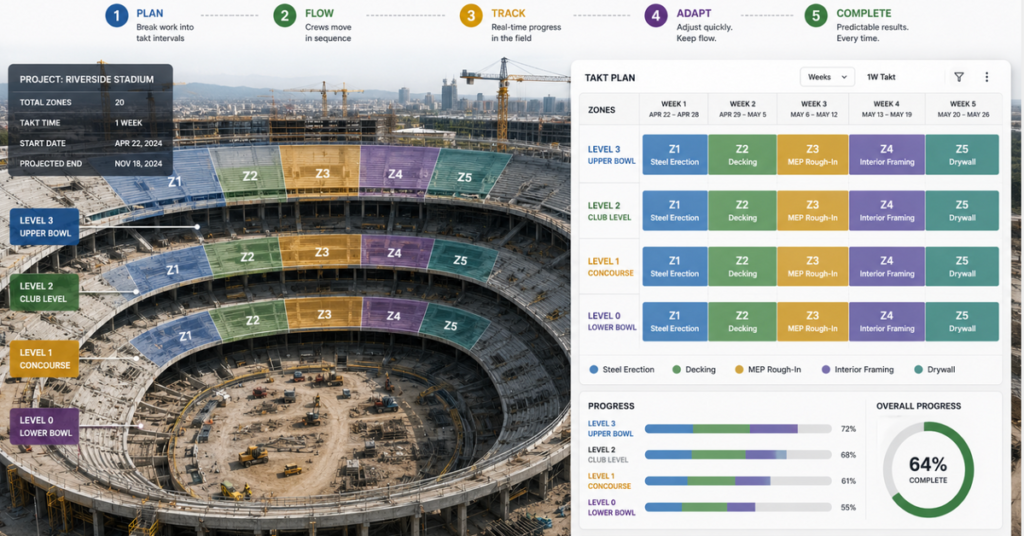
Stadium construction looks impressive from the outside. But behind the scenes, it’s one of the most coordination-heavy project types in construction. Massive structures. Multiple trades. Tight deadlines tied to events or seasons. And a constant risk of everything happening at once. Traditional schedules struggle in this environment. They outline tasks, but they don’t control how work moves across such a large and complex space. The result is congestion, misalignment, and wasted effort. Takt…

inTakt

May 28, 2026

Why Adding More Workers Won’t Fix Your Delays

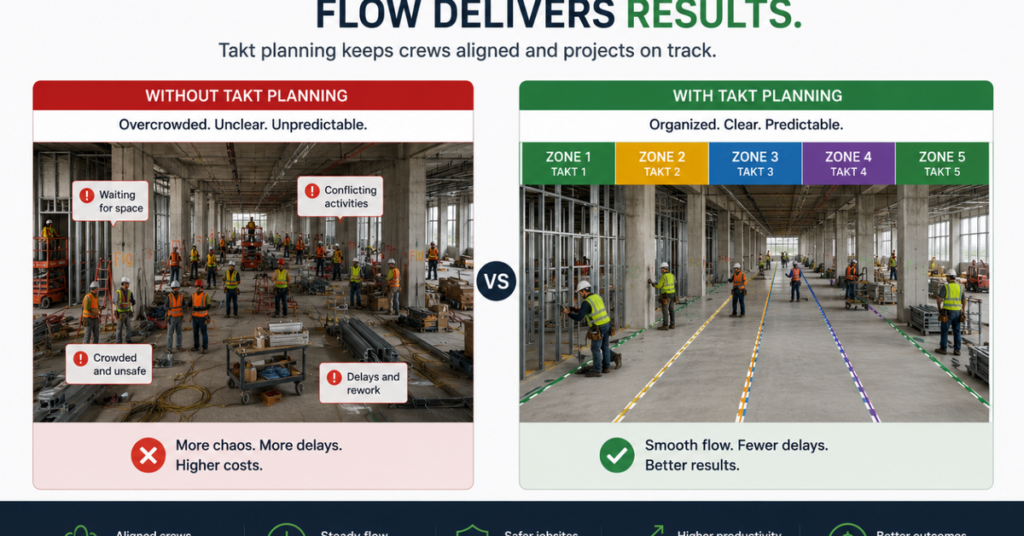
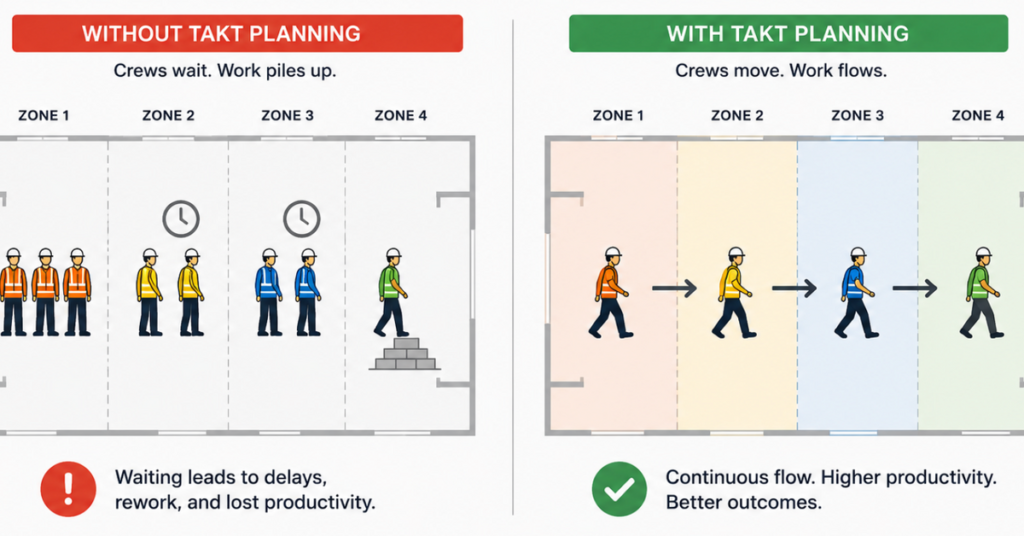
When a project falls behind, the instinct is simple: add more people. More workers should mean faster progress, right? Not necessarily. If the underlying workflow is broken, adding more workers often makes things worse. More crews in the same space create congestion. Tasks start overlapping. Coordination becomes harder. Instead of speeding things up, the project becomes chaotic. The problem isn’t capacity—it’s flow. Construction productivity depends on how smoothly work moves from one team to…

inTakt

May 27, 2026

The Common Scheduling Problem Across Every Project Type

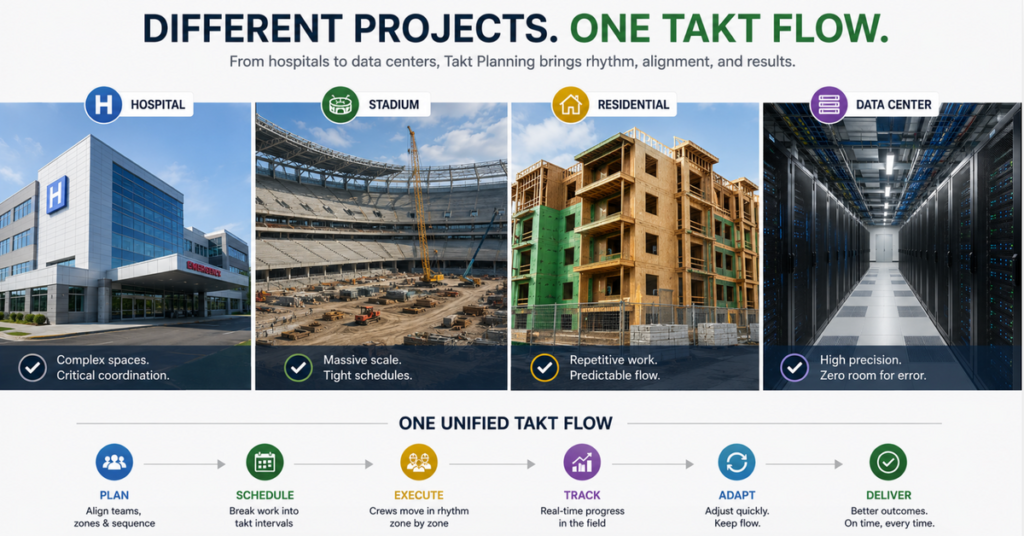
Hospitals, stadiums, residential buildings, data centers—every project is different. But they all share the same problem. Schedules don’t create flow. They define tasks and timelines, but they don’t control how work actually happens in the field. So regardless of the project type, the same issues appear: delays, overlap, waiting, and constant adjustments. The difference isn’t the building—it’s the system behind it. Lean construction planning focuses on flow as the foundation of execution….

inTakt

May 25, 2026

The Real Cost of Poor Workflow in Construction Projects

When people think about project costs, they think about materials, labor, and equipment. What they don’t think about is workflow. But poor workflow is one of the most expensive problems in construction—and it often goes unnoticed. Crews waiting for access. Teams working out of sequence. Areas sitting idle while others are overcrowded. These aren’t isolated issues—they’re symptoms of a broken system. And the cost adds up fast. Lost hours turn into lost days. Small inefficiencies compound into…
inTakt - Construction Scheduling Software Log

inTakt

May 20, 2026

Why Industrial Projects Break Without Flow

Industrial construction projects are driven by systems. Piping, equipment, structural components—all tightly connected and highly dependent on sequencing. But many projects still rely on schedules that don’t reflect how those systems come together. The result is predictable. Work gets installed out of sequence. Areas become congested. Critical paths get disrupted. And once flow breaks, recovery becomes difficult. Takt planning introduces control. Instead of managing tasks independently, it…

inTakt

May 13, 2026

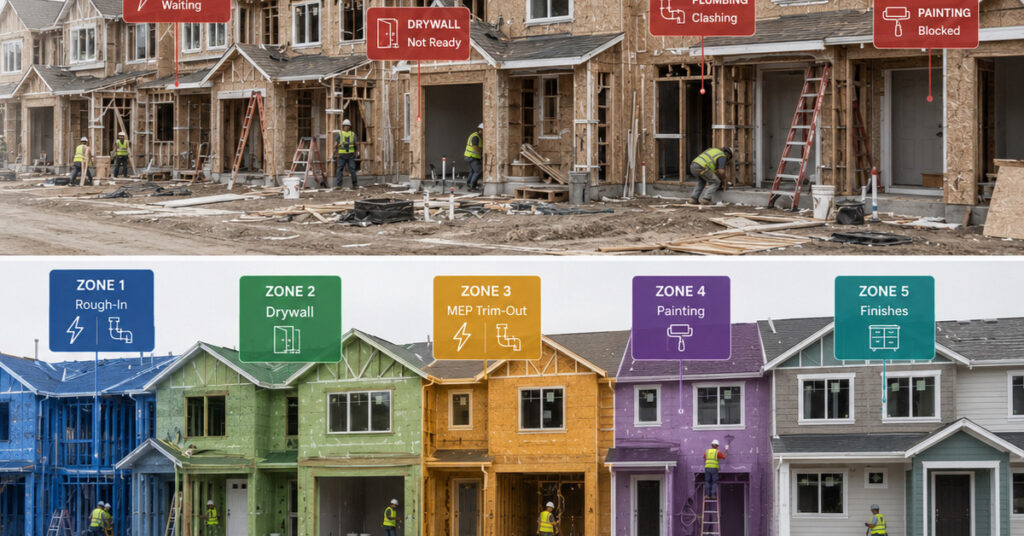
Why Residential Projects Suffer from Invisible Delays

Residential construction looks simple compared to large commercial builds. But that simplicity is deceptive. Whether it’s single-family homes or large multifamily developments, the same problem shows up again and again: invisible delays. Crews move from unit to unit, but not in a consistent way. Some areas move ahead, others fall behind. Trades overlap or wait without clear direction. The project feels busy—but progress isn’t steady. Traditional schedules don’t solve this because they focus…

inTakt

May 4, 2026

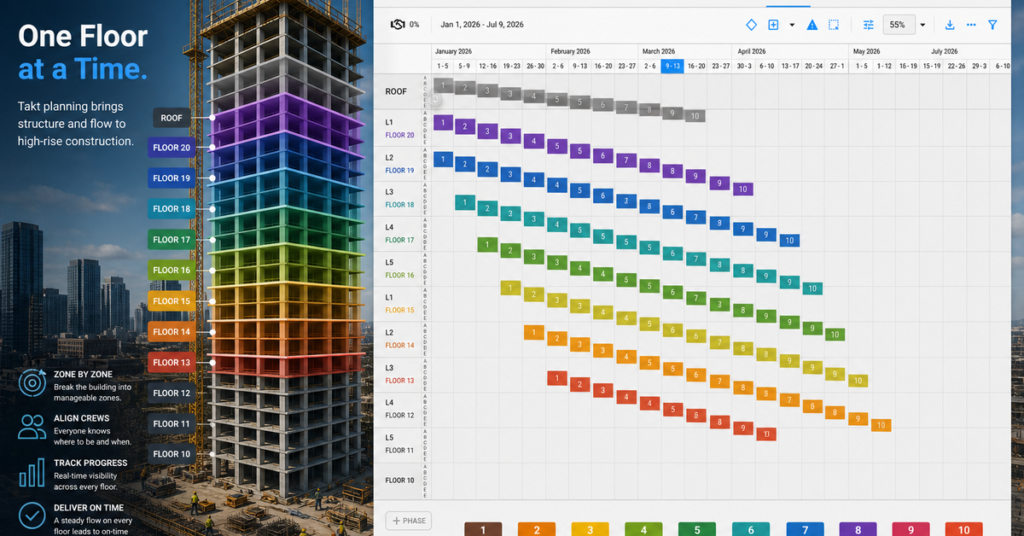
The Real Reason High-Rise Projects Lose Momentum

High-rise construction is all about vertical movement. But that’s also where things go wrong. As crews move floor to floor, small delays start stacking. One trade falls behind, and suddenly multiple levels are out of sync. The higher the building goes, the harder it becomes to recover. Traditional schedules don’t handle this well. They don’t control how work flows vertically or how trades interact across floors. So teams end up constantly adjusting instead of progressing. Takt planning…

inTakt

April 14, 2026

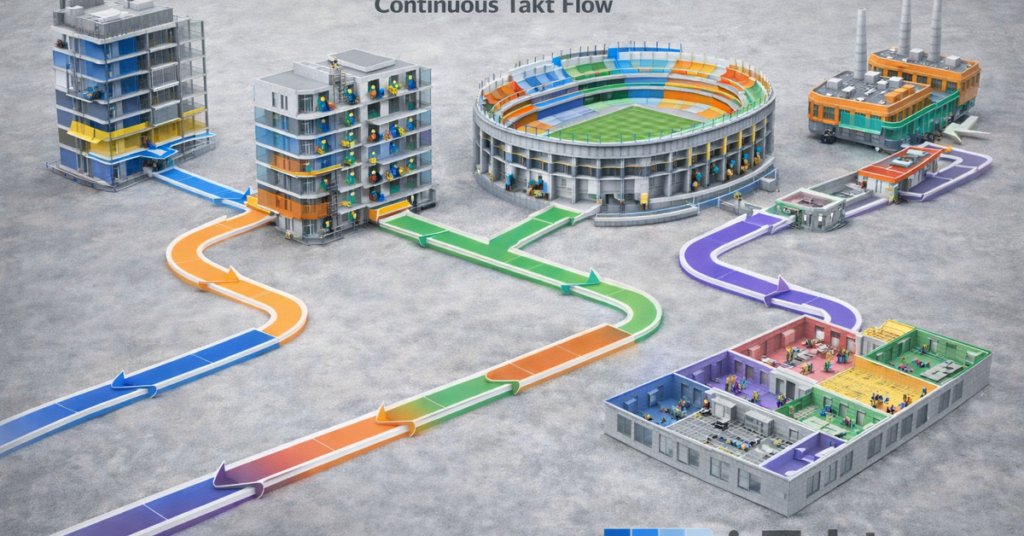
Why Takt Planning Works Across Every Building Type

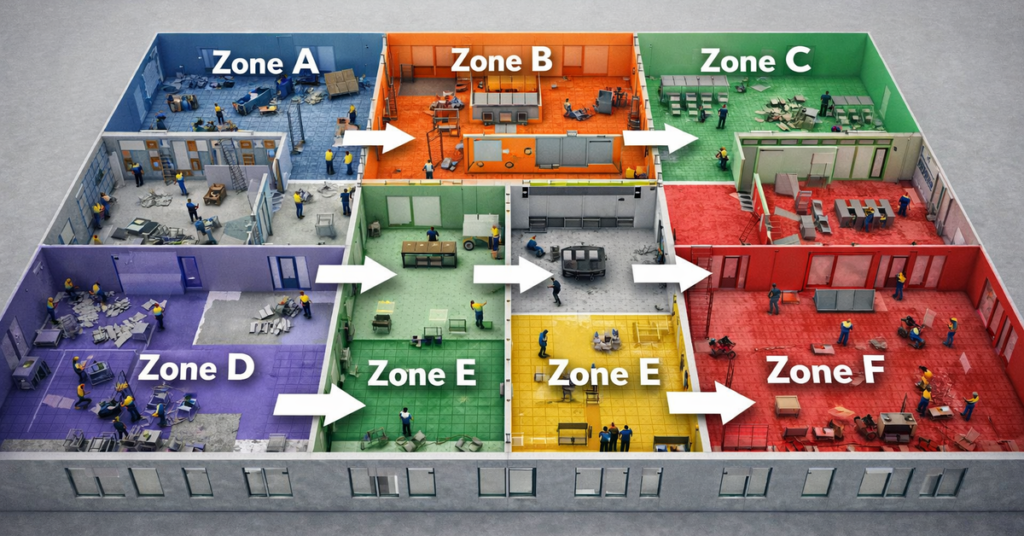
Construction projects vary widely in size, complexity, and building type. From residential towers to data centers, each project presents unique challenges. Despite these differences, Takt Planning continues to deliver consistent results across all of them.The reason is that Takt Planning focuses on how work flows through a project rather than simply listing activities. By organizing work into zones and sequences, teams can create a predictable production system that reflects how the building is

inTakt

April 13, 2026

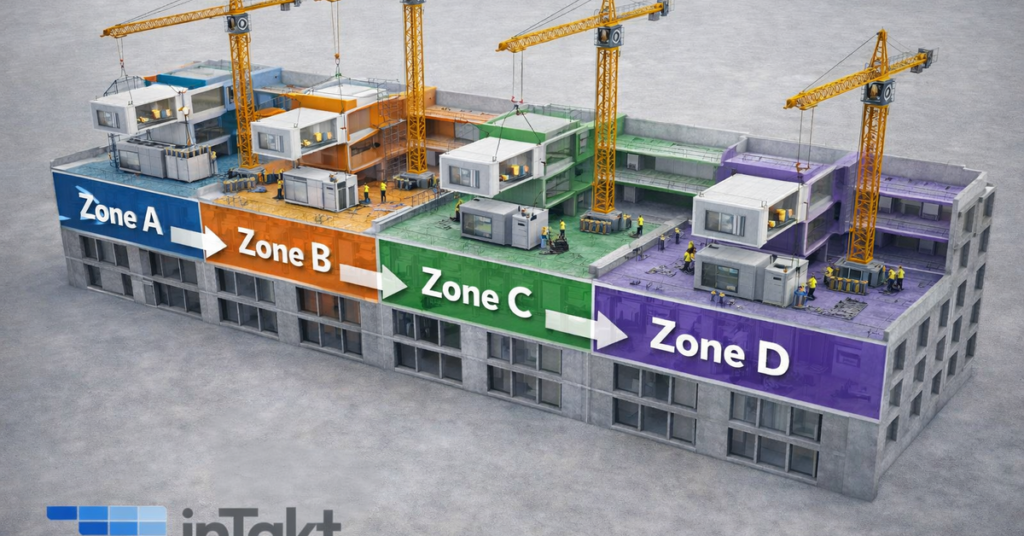
Takt Planning for Modular Construction

Modular construction requires coordination between offsite manufacturing and onsite installation. Both processes must align closely to ensure modules arrive at the right time and can be installed without delays.Traditional schedules often treat these processes separately. This creates disconnects between factory production and field installation, leading to storage issues, delays, or rework.Takt Planning helps synchronize these efforts by organizing both production and installation into a consis

inTakt

April 10, 2026

Why Takt Planning Works for Renovation Projects

Renovation projects are often unpredictable due to unknown conditions, limited access, and ongoing operations within the building. These challenges make it difficult to rely on traditional scheduling methods that assume stable conditions.In many renovation projects, crews spend significant time searching for work areas that are ready. This leads to inefficiencies, delays, and repeated work as teams move in and out of the same spaces.Takt Planning introduces structure by organizing renovation wor