Category: Takt Plan Applies to Every Type of Building

Explore articles, tips, and prospectives on construction scheduling, production flow, and improving project reliability. From tactical job-site ideas to broader planning concepts, out goal is simple: help teams build more predictable projects.

New ideas. Practical guidance. Continuous improvement

inTakt

April 9, 2026

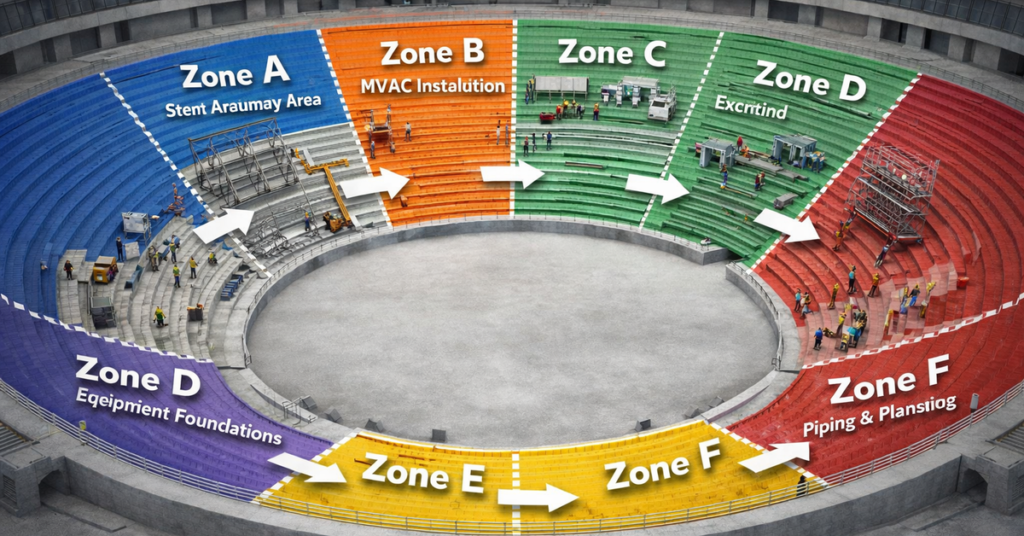
Takt Planning for Stadium Construction

Stadium construction projects involve a large scale of work across multiple types of spaces, including seating areas, concourses, service zones, and structural systems. Coordinating these elements with traditional scheduling methods can become overwhelming.Schedules often show thousands of activities, but they do not clearly represent how work moves through the stadium. Crews may end up working in scattered areas, creating congestion and incomplete zones.Takt Planning divides stadium constructio

inTakt

April 8, 2026

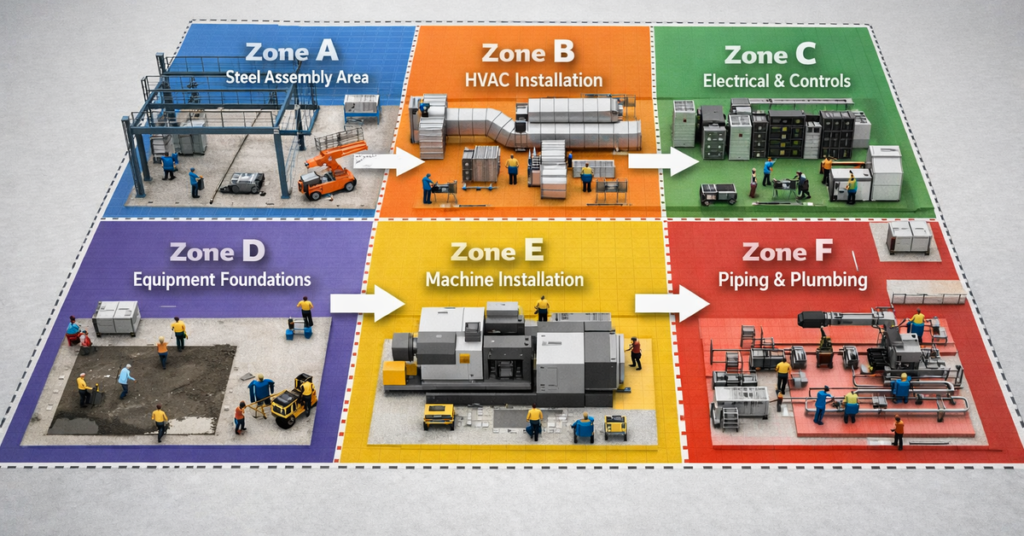
Takt Planning for Manufacturing Facilities

Manufacturing facilities require careful coordination between building construction and equipment installation. These projects often involve complex systems that must be installed in a specific sequence to support future operations. Without a structured plan, this coordination becomes difficult and leads to delays.Traditional schedules tend to separate building work from equipment installation. This creates gaps where one team finishes work but the next team is not ready to begin. The result is

inTakt

April 7, 2026

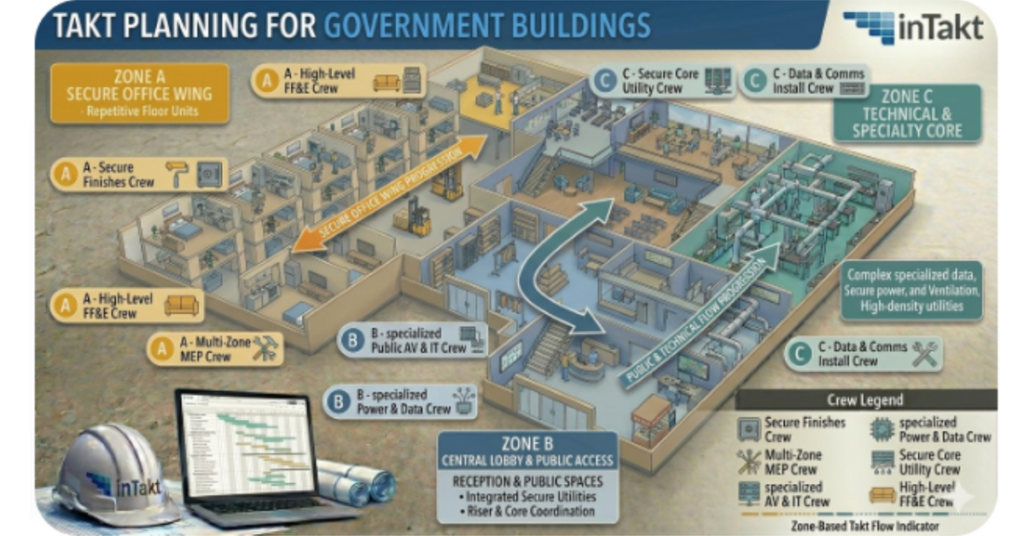
Takt Planning for Government Buildings

Government construction projects often involve strict oversight, complex approval processes, and large project teams. Maintaining coordination across these stakeholders can be challenging, especially when information is fragmented and schedules are difficult to interpret in the field.Traditional schedules provide high level visibility but may not clearly represent how work progresses through the building. Teams often rely on separate conversations, meetings, and interpretations to understand wha

inTakt

April 6, 2026

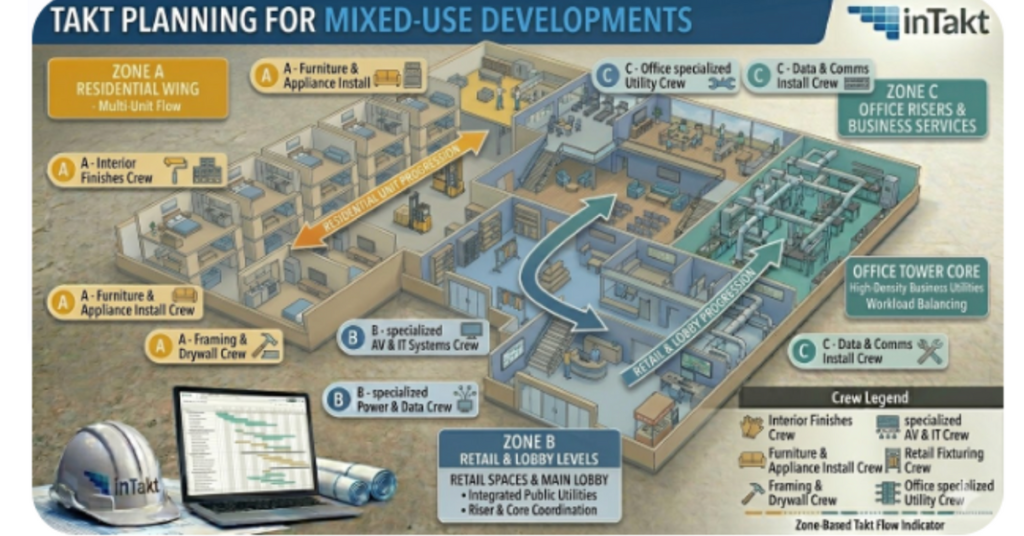
Why Takt Planning Works for Mixed Use Developments

Mixed use developments combine residential, retail, office, and hospitality spaces within a single project. Each of these building types has different construction requirements and trade sequences.Traditional schedules struggle to represent this complexity because each building type behaves differently. Coordination between teams becomes challenging.Takt Planning helps organize work by creating structured sequences for each area of the development. Zones can be planned independently while still

inTakt

April 3, 2026

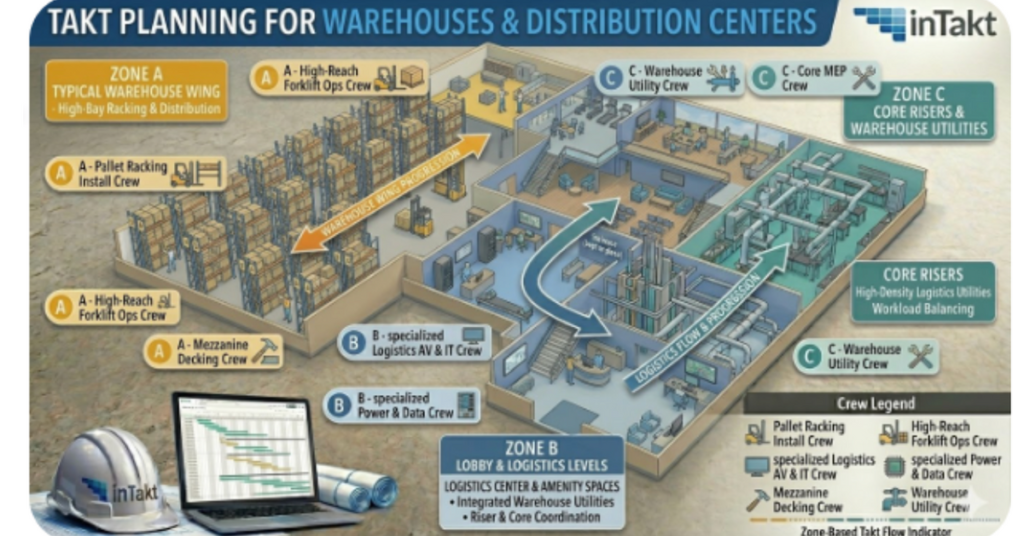
Takt Planning for Warehouses and Distribution Centers

Warehouse and distribution centers often appear simple due to their large open spaces, but the coordination between structural, mechanical, electrical, and logistics systems can still be complex.Traditional schedules may underestimate this complexity because they focus on high level activities rather than how crews move across the building.Takt Planning introduces structure by organizing work through defined zones across the facility. Crews progress through the building with a consistent sequenc

inTakt

April 2, 2026

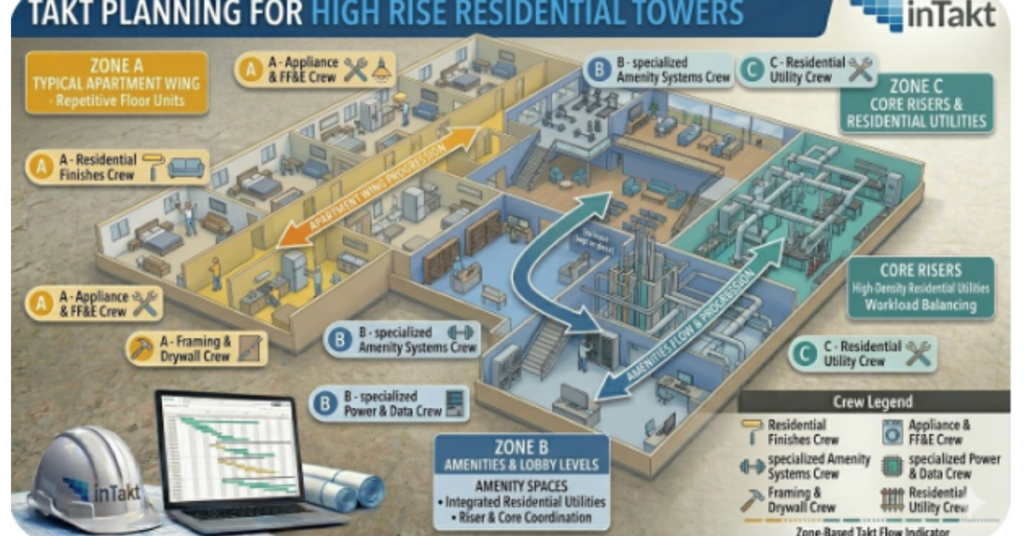
Takt Planning for High Rise Residential Towers

High rise residential towers present unique scheduling challenges due to vertical construction and repeated floor layouts. Trades must coordinate work across multiple floors while maintaining a steady production pace.Traditional schedules often create confusion because crews work on several floors at once. This spreads manpower and materials across the building, making coordination more difficult.Takt Planning helps by structuring work floor by floor and zone by zone. Trades move upward through

inTakt

April 1, 2026

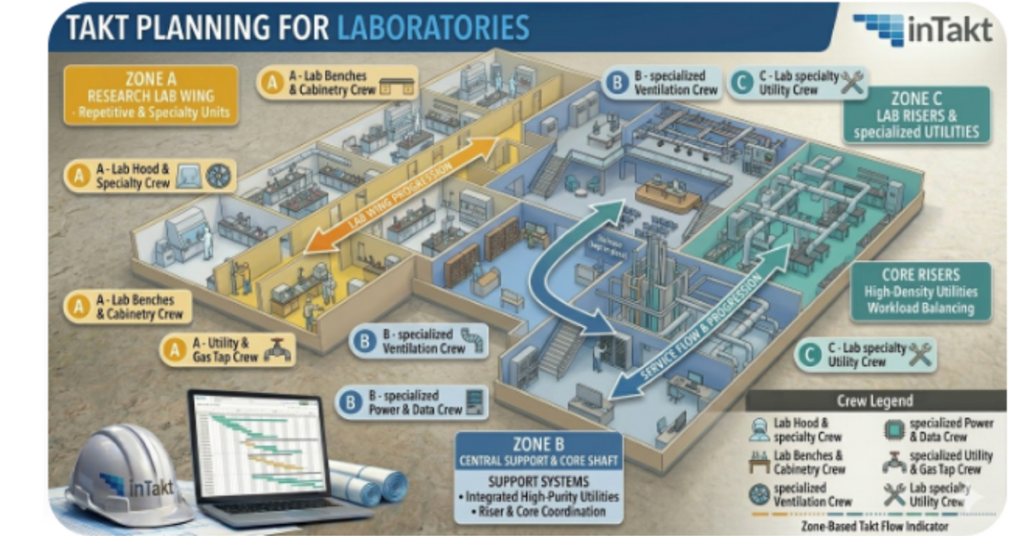
Why Takt Planning Works for Laboratories

Laboratory facilities contain some of the most complex mechanical and electrical systems found in commercial construction. Ventilation systems, specialized utilities, and equipment integration require careful coordination.Traditional scheduling approaches often struggle to represent how these systems interact within the building. Crews may arrive in areas that are not ready or compete for access to the same workspaces.Takt Planning introduces a clear sequence that organizes trades through labora

inTakt

March 31, 2026

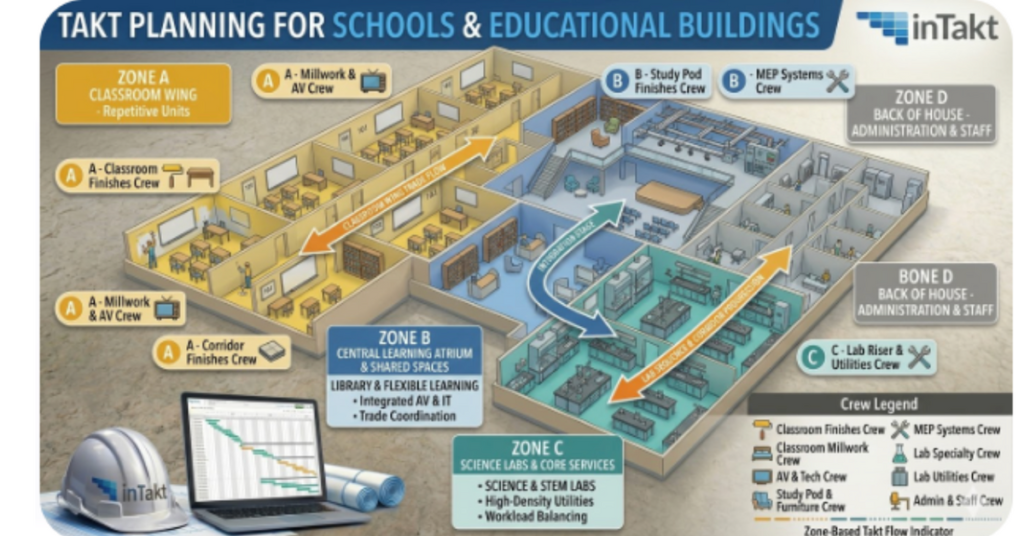
Takt Planning for Schools and Educational Buildings

Educational buildings often contain a mixture of classrooms, laboratories, offices, and shared spaces. These different areas require coordination between multiple trades while maintaining a tight construction timeline.Traditional schedules typically list activities and durations but do not clearly show how work moves through the building. As a result crews often overlap in the same areas, which leads to congestion and unfinished spaces.Takt Planning solves this challenge by organizing work throu

inTakt

March 30, 2026

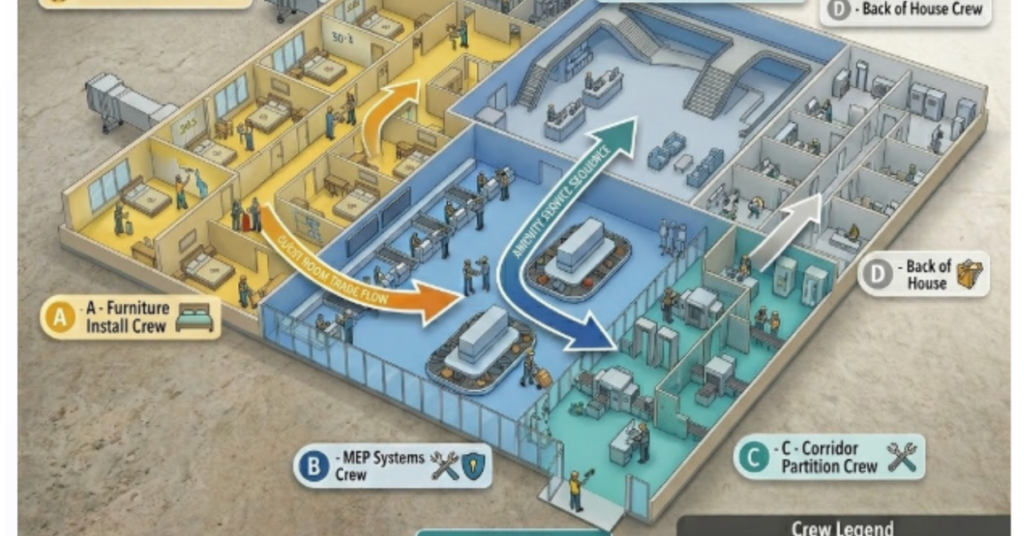
Why Takt Planning Works for Hotels

Hotel construction shares many characteristics with multifamily projects, particularly the repetition of rooms and systems across floors. This repetition creates an opportunity for teams to organize work in a structured production rhythm rather than reacting to daily conflicts between trades.Traditional schedules often struggle with hotel projects because crews spread across multiple rooms or floors trying to stay productive. The result is incomplete rooms, inconsistent handoffs, and trades retu

inTakt

March 27, 2026

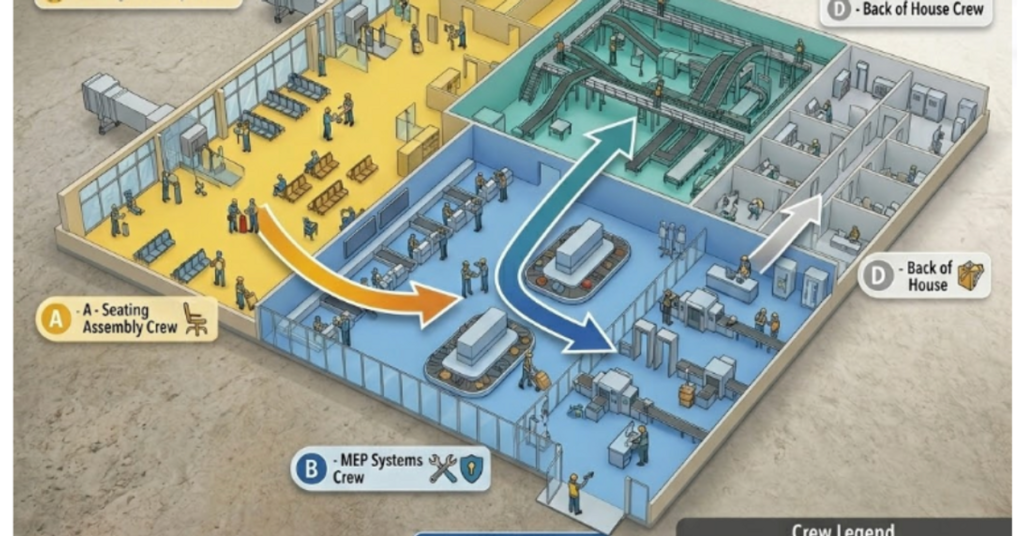
Takt Planning for Airports

Airport construction involves highly complex systems including security infrastructure, mechanical systems, baggage handling, and passenger circulation areas. Managing these elements requires careful coordination between trades.Traditional schedules can become overwhelming due to the large number of activities involved. However these schedules often fail to show how work actually moves through the facility.Takt Planning simplifies coordination by dividing the project into zones and sequencing tr