Category: Takt Plan Applies to Every Type of Building

Explore articles, tips, and prospectives on construction scheduling, production flow, and improving project reliability. From tactical job-site ideas to broader planning concepts, out goal is simple: help teams build more predictable projects.

New ideas. Practical guidance. Continuous improvement

inTakt

March 26, 2026

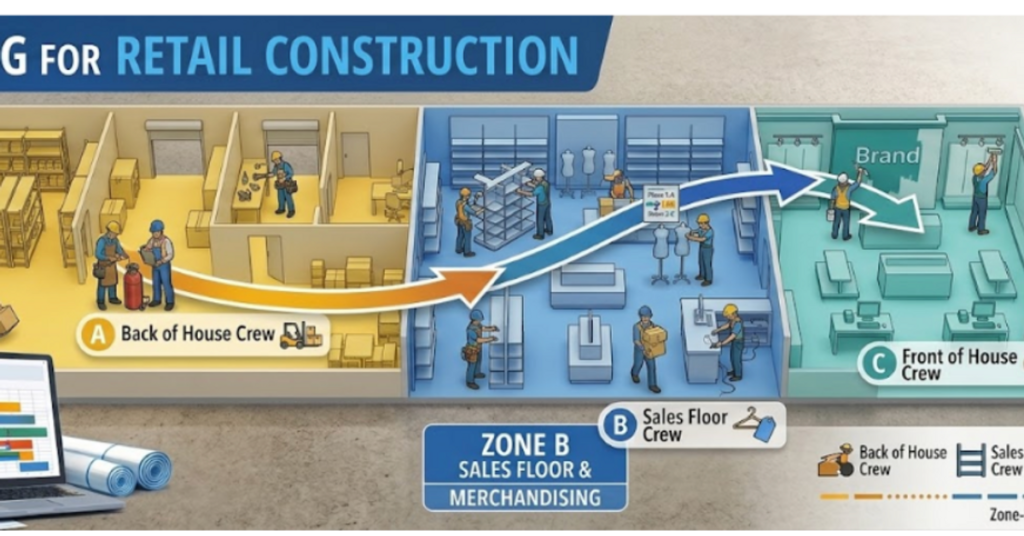
Takt Planning for Retail Construction

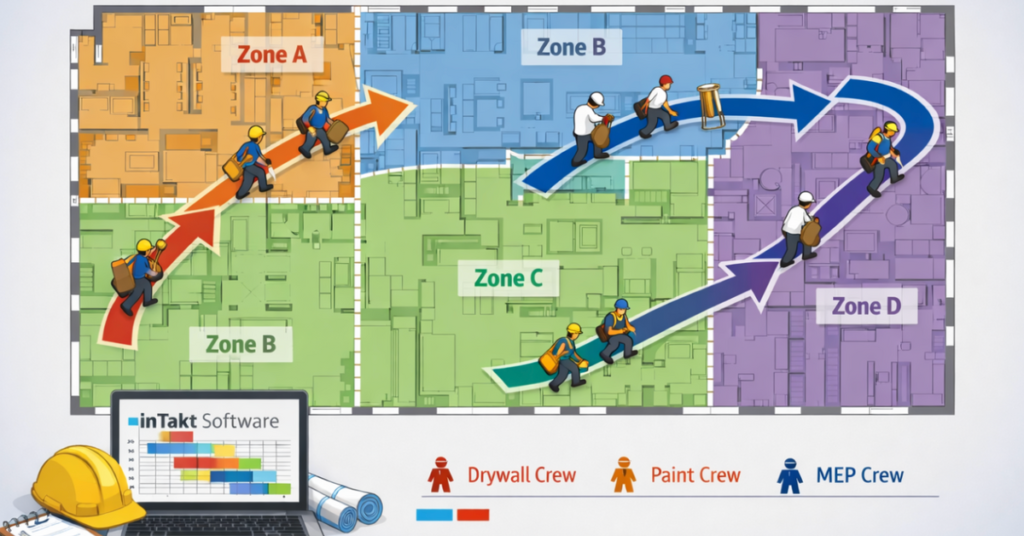
Retail construction often requires fast delivery and precise coordination. Store layouts must be completed quickly while maintaining high quality finishes and systems integration.Traditional schedules frequently create congestion because multiple trades try to complete work simultaneously in small areas. This leads to delays and unfinished spaces.Takt Planning organizes the project into zones and sequences trades through those zones in a controlled rhythm. This approach reduces stacking and impr

inTakt

March 25, 2026

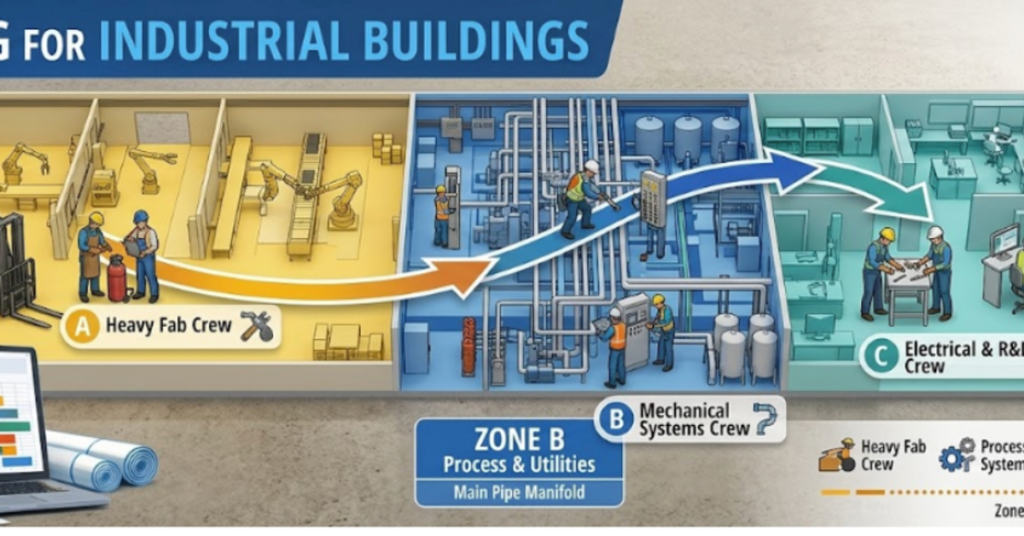
Why Takt Planning Works for Industrial Buildings

Industrial buildings often contain large open spaces combined with areas of extremely dense systems. Mechanical equipment, piping, electrical systems, and structural components must all be installed in coordination.Traditional schedules tend to focus on milestone dates and activity lists. However these methods do not always reflect how work moves through the facility. Crews frequently compete for access to the same areas.Takt Planning organizes work so trades move through zones in a consistent s

inTakt

March 24, 2026

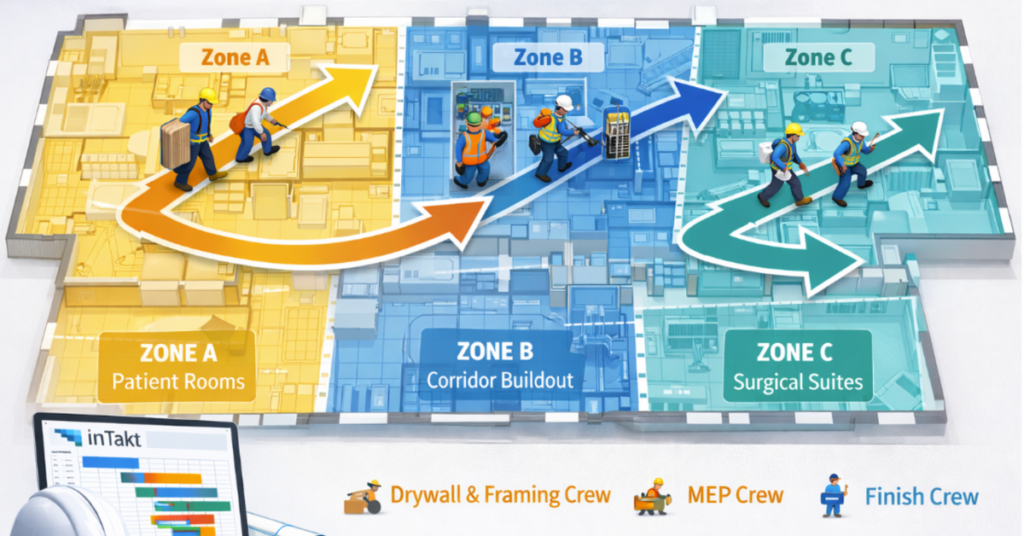
Why Takt Planning Works for Hospitals

Hospital construction projects are among the most complex building types in the industry. Mechanical systems, medical equipment, specialized rooms, and strict quality requirements make coordination extremely challenging.Traditional schedules struggle to manage this complexity because activities alone do not represent how work interacts inside the building. Trades often overlap in sensitive areas, creating delays and rework.Takt Planning introduces a structured sequence that helps crews move thro

inTakt

March 23, 2026

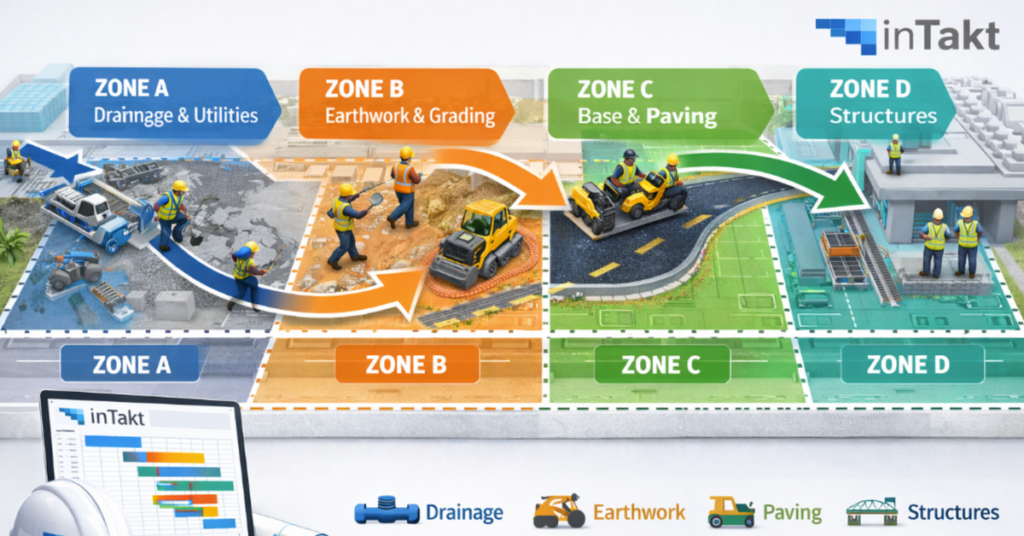
Takt Planning for Civil Infrastructure Projects

Civil infrastructure projects often cover large areas and involve many specialized crews. Roadways, utilities, drainage systems, and structural elements all require coordination across long distances. Managing this complexity with traditional scheduling can be difficult.Civil projects frequently experience delays because work areas are not clearly defined. Crews move ahead or fall behind depending on conditions, and handoffs between activities become unpredictable.Takt Planning introduces struct

inTakt

March 19, 2026

Takt Planning for Commercial Office Buildings

Commercial office projects often involve complex coordination between multiple trades working in shared spaces. Mechanical systems, electrical distribution, ceilings, finishes, and inspections all compete for the same areas. Without a structured production system, crews constantly interfere with each other.Traditional scheduling methods typically focus on activities and milestone dates. While this works at a high level, it does not always help teams manage daily production in the field. Crews st

inTakt

March 18, 2026

Why Takt Planning Works for Multifamily Construction

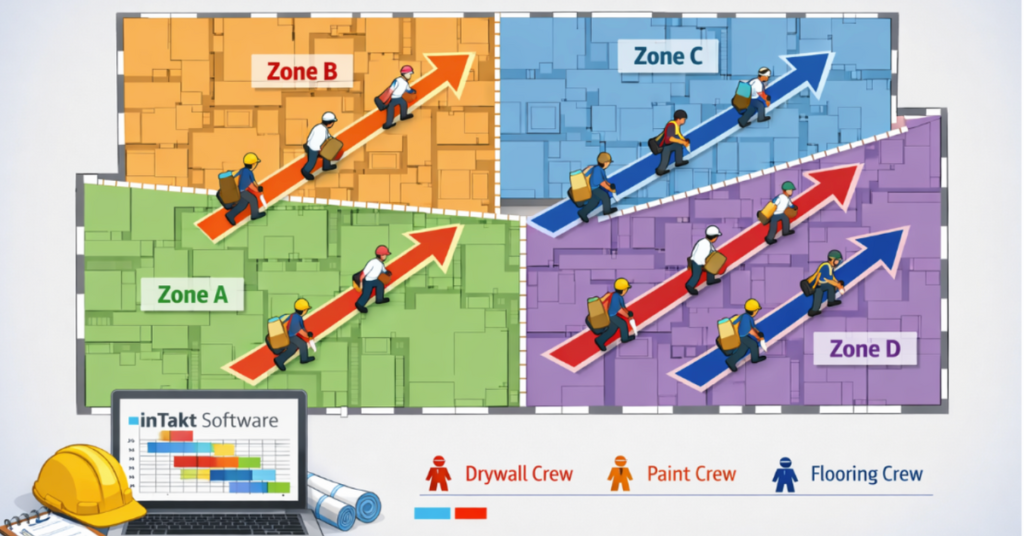
Multifamily construction is one of the environments where Takt Planning naturally performs well. These projects contain repeating units, repeating systems, and consistent trade sequences that make them ideal for a flow based production approach. When the work is organized correctly, crews can move through the building with a rhythm that reduces disruption and increases predictability.Traditional schedules often struggle in multifamily projects because they organize work primarily by activity ins

inTakt

March 17, 2026

Top 3 Best Ways to Mitigate a Delay

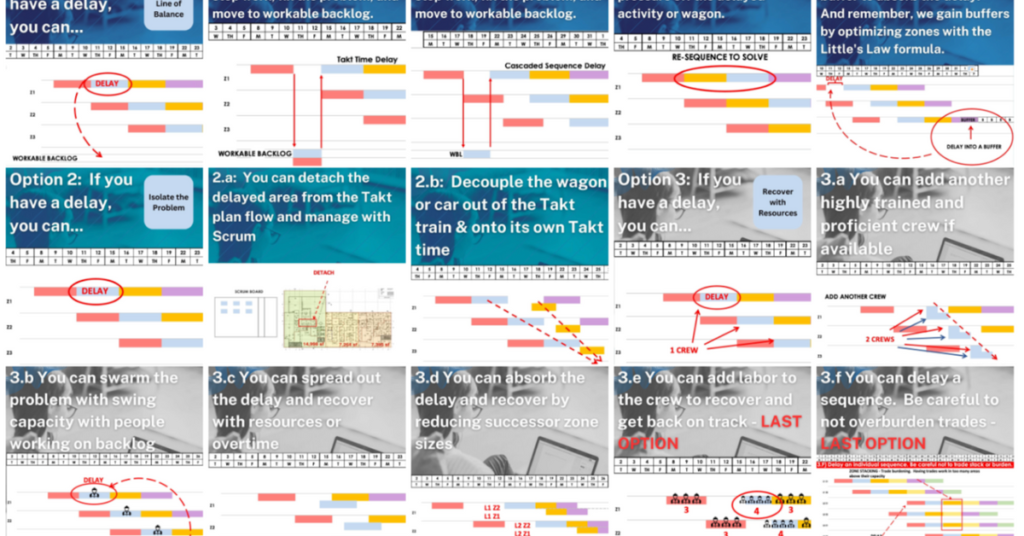
Delays happen on every construction project. Weather changes, materials arrive late, and unexpected conditions appear in the field. The goal is not to eliminate every delay, but to manage them in a way that protects the overall schedule.Here are three effective ways to mitigate delays.The first strategy is identifying constraints early. Many delays begin with missing prerequisites such as materials, approvals, or access. Strong look ahead planning helps teams identify these issues weeks in advan

inTakt

March 13, 2026

Why it’s important to connect flow of schedule to location in drawings

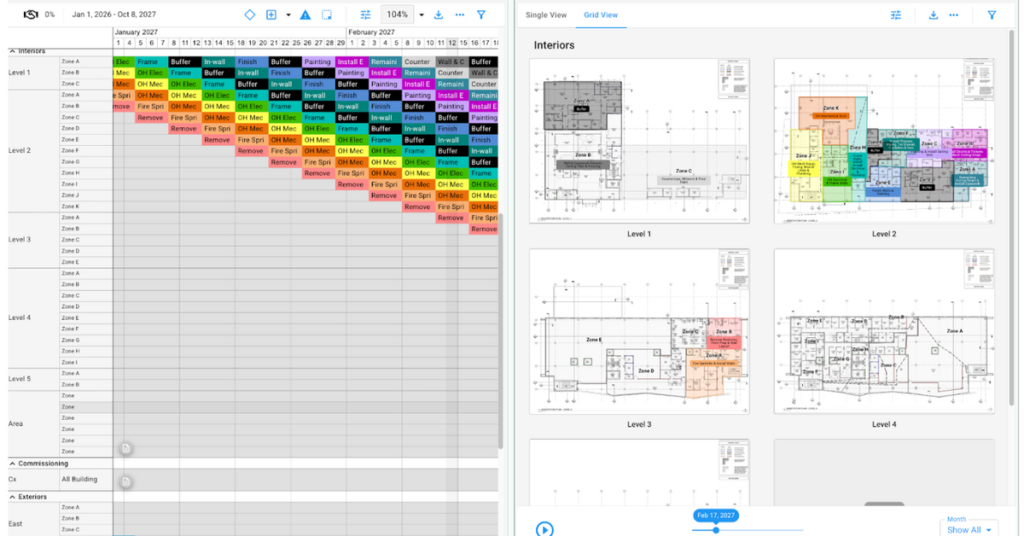
One of the biggest reasons schedules fail in the field is that they are disconnected from the building itself. A schedule might list hundreds of activities, but it does not clearly show where that work is happening inside the project.When location is missing, trades make their own decisions about where to start. Crews spread out across multiple areas, supervisors try to manage overlapping work, and handoffs become unpredictable. The schedule may look organized, but the building does not.Connecti

inTakt

March 13, 2026

Why Takt Planning Works for Data Centers

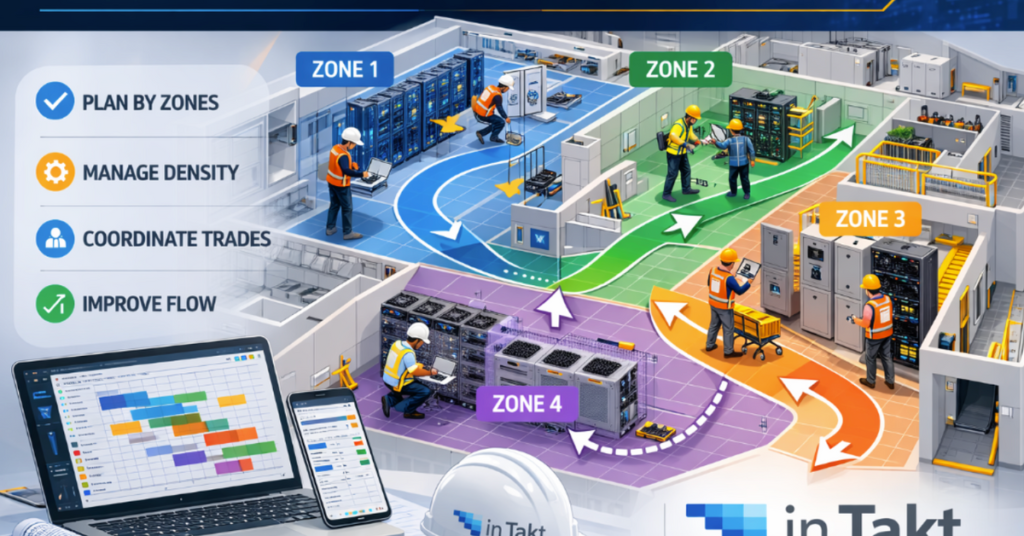
Data center construction demands an extraordinary level of coordination. Mechanical systems, electrical infrastructure, cooling systems, and structural elements must all align perfectly. The density of systems inside these facilities makes scheduling extremely challenging.Traditional schedules often struggle to reflect how work actually progresses through a data center. The schedule may show activities in sequence, but the physical space and system density create constant trade interference. Cre

inTakt

March 12, 2026

Why inTakt is better than CPM?

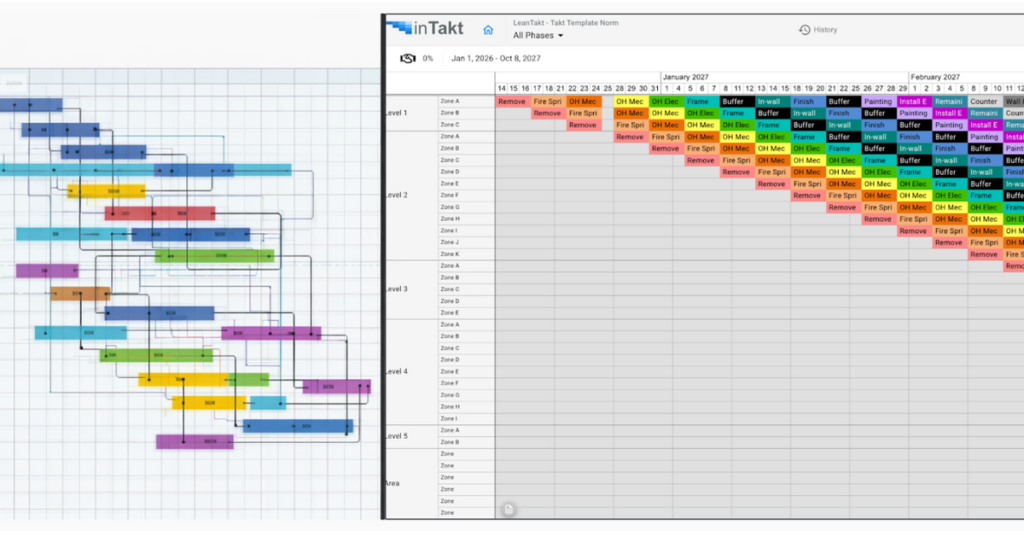
CPM schedules have been used in construction for decades, but many teams struggle to use them as real production tools. A CPM schedule can contain thousands of activities, yet the field often relies on separate spreadsheets, meetings, and notes to figure out what should actually happen next.The main challenge is visibility. CPM schedules show logic between tasks, but they do not always show how crews will move through the building. Trades often start work wherever space is available instead of f