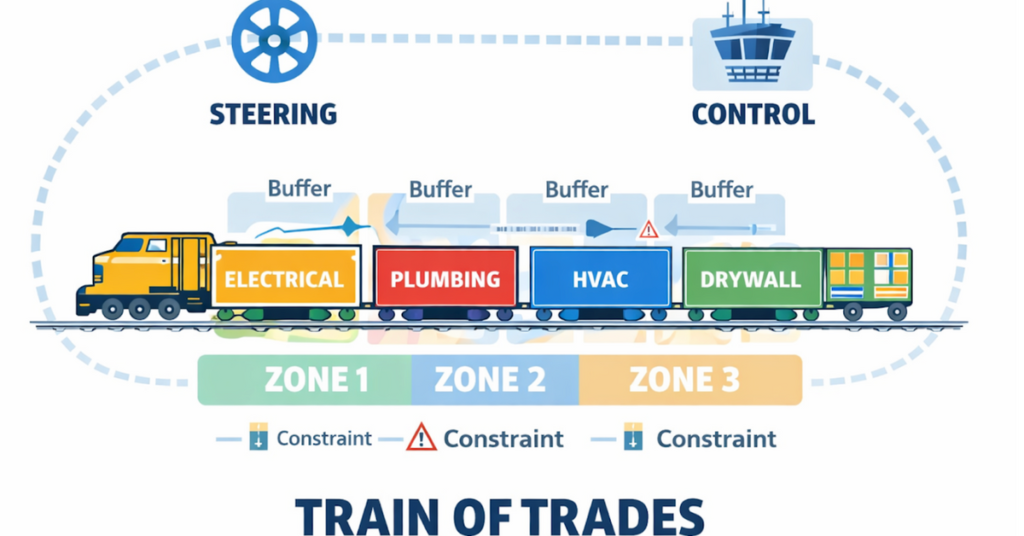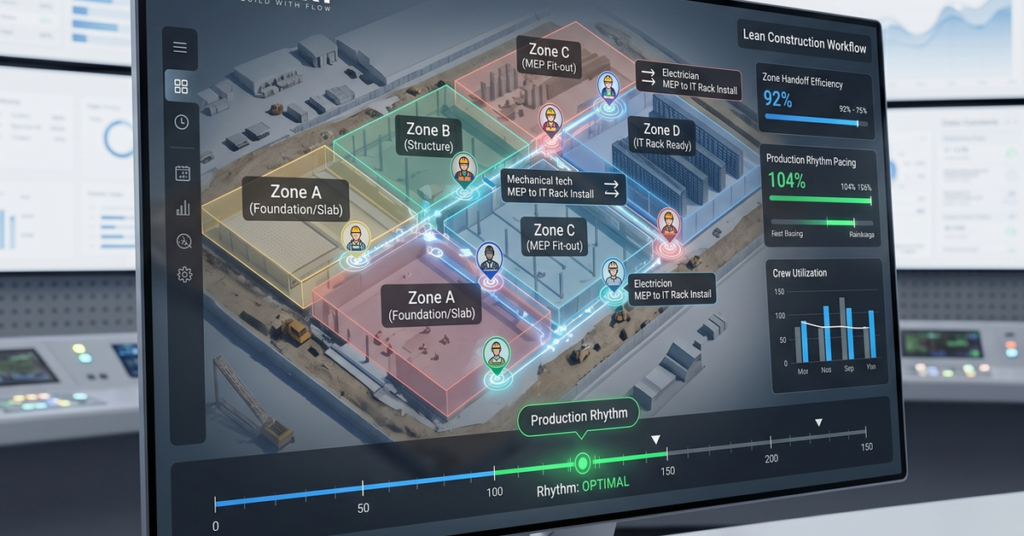
Takt does not stop once the plan is created. It continues in the field through active production control. That means steering the Train of Trades so crews move through zones in a predictable rhythm, instead of leapfrogging and stacking on top of each other. It means tracking constraints and roadblocks early, clearing them before they interrupt flow, and making readiness visible so work starts only when the conditions are actually in place. When the plan is treated like a living production system, the team gains the ability to protect finished work, stabilize handoffs, and keep momentum even when surprises show up.
Buffers are a key part of that control because they give the system room to absorb variability. Without protection, one late inspection or one delayed crew can trigger a chain reaction that spreads across the project. With intentional buffers, the plan can take small hits without collapsing. Instead of responding with overtime, crew stacking, and constant resequencing, the team can recover inside the system. That is what prevents cascading chaos and keeps downstream trades from paying the price for upstream instability.
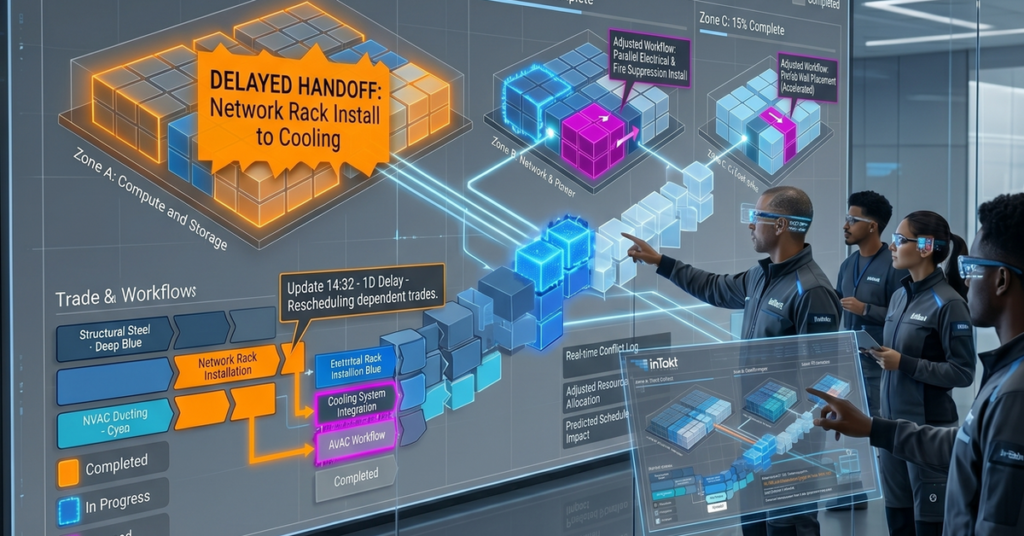
Production control also requires adjusting in real time, without breaking the overall rhythm. Takt allows teams to make smart shifts while still preserving the logic of zones and sequence. The goal is not rigid compliance. The goal is stable flow. When adjustments are made inside a structured system, they stay visible, coordinated, and aligned with the production intent, rather than turning into isolated decisions that create new interference somewhere else.
Most importantly, production control means controlling the environment, not the people. The purpose of Takt is not to push crews harder. It is to make success easier by shaping the conditions that crews work in. When Takt is used properly, teams do not spend their days reacting to problems. They absorb them, recover quickly, and keep the project moving. That is the difference between hoping a project finishes and building a system that makes sure it does.