Category: What is Takt Scheduling

Explore articles, tips, and prospectives on construction scheduling, production flow, and improving project reliability. From tactical job-site ideas to broader planning concepts, out goal is simple: help teams build more predictable projects.

New ideas. Practical guidance. Continuous improvement

inTakt

May 5, 2026

Why Your Schedule Looks Good on Paper but Fails in Reality

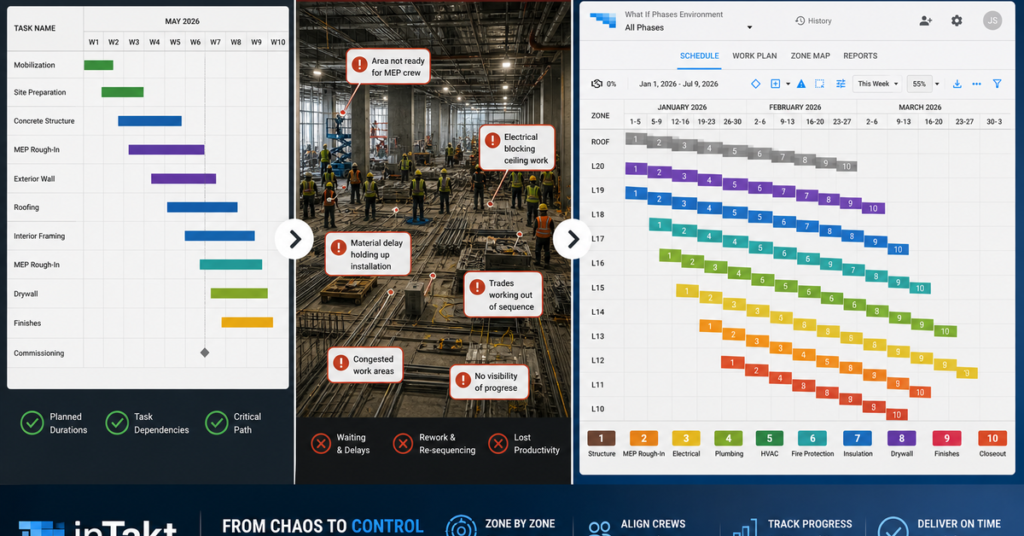
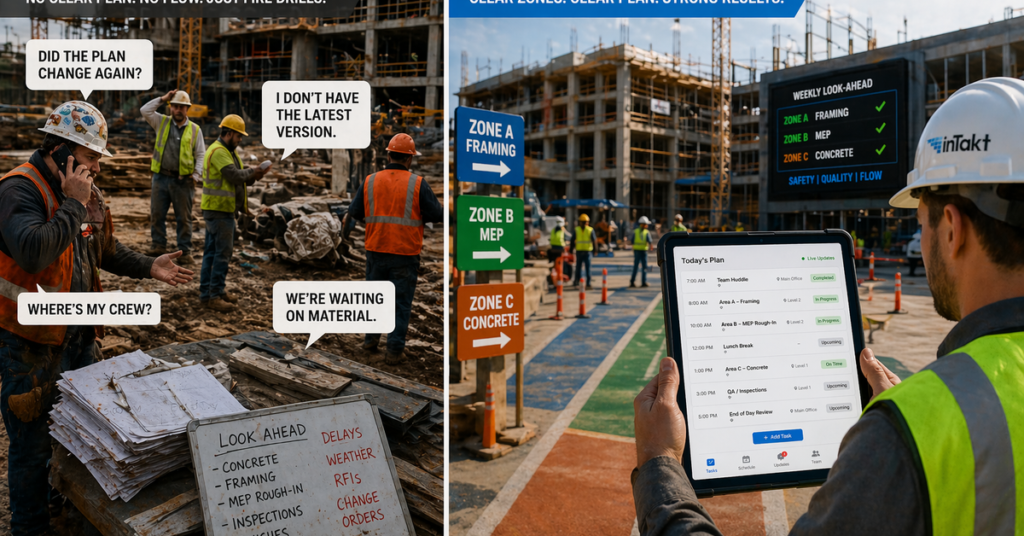
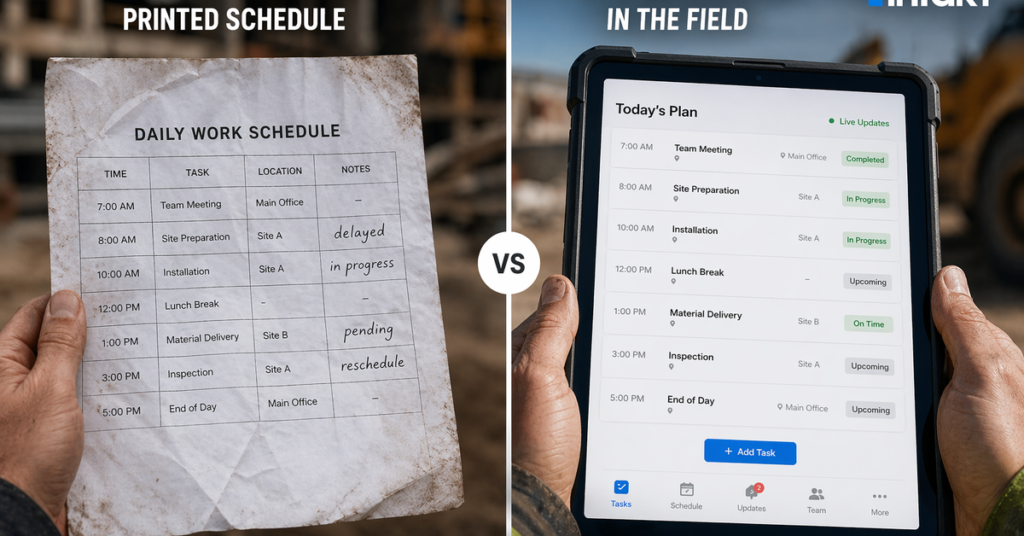
On paper, everything lines up. Tasks are sequenced, timelines are defined, and deadlines look achievable.But once the project starts, things begin to break down. Crews arrive and can’t start. Areas aren’t ready. Work overlaps in ways that weren’t planned. Suddenly, a “perfect” schedule turns into constant firefighting. The issue isn’t that the schedule was wrong—it’s that it wasn’t built for reality. Traditional construction scheduling software focuses on tasks and durations. But construction…

inTakt

April 30, 2026

How Construction Teams Eliminate Chaos with Collaborative Scheduling

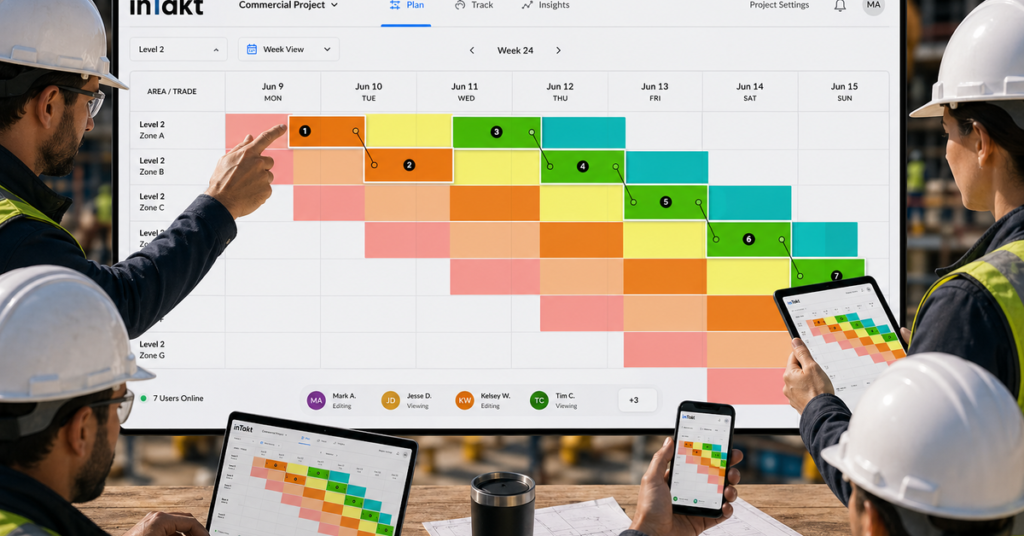
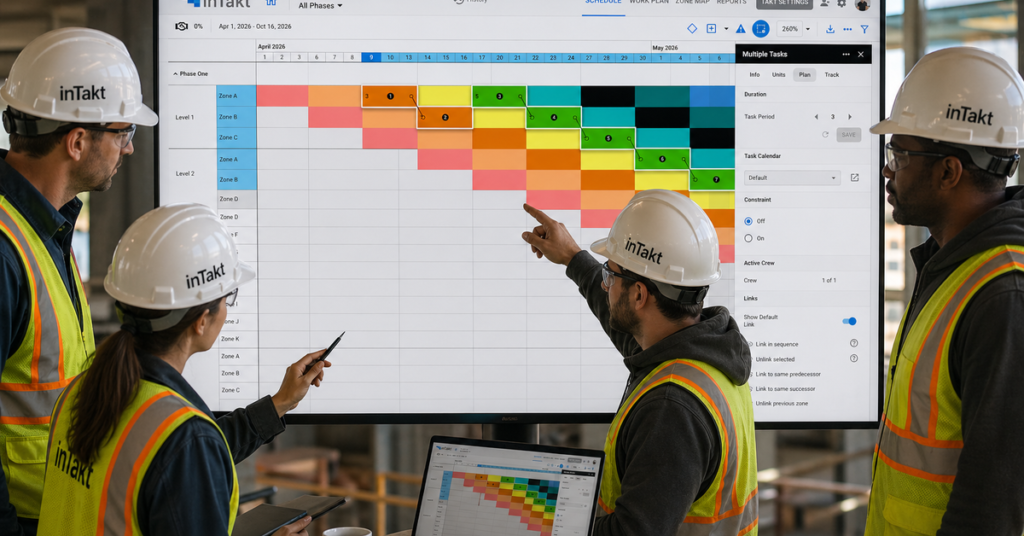
Chaos on a construction project doesn’t usually come from complexity—it comes from disconnection. When teams plan separately, update separately, and communicate separately, the project starts to break down. Collaborative scheduling changes that completely. Instead of each role working in isolation, everyone contributes to the same plan. Supers, PMs, foremen, and trade partners are aligned from the start and stay aligned as the project evolves. The difference is immediate. Conversations become…

inTakt

April 29, 2026

Why One Source of Truth Is Critical in Construction Scheduling

Construction projects don’t fail because of bad intentions—they fail because teams are working from different information. When multiple versions of a schedule exist, confusion becomes unavoidable. One team follows an outdated plan, another makes decisions based on assumptions, and alignment disappears. This is why having a single source of truth is critical in construction scheduling. Every team member—from supers to trade partners—needs to see the same plan, updated in real time. Without…

inTakt

April 28, 2026

The Hidden Cost of Poor Construction Scheduling (And How to Fix It)

One of the biggest challenges in construction isn’t effort—it’s accountability. When plans are unclear or constantly changing, it becomes difficult to know who is responsible for what and when. That lack of clarity leads to missed handoffs, delays, and frustration across the entire team. The problem isn’t the people. It’s the system. When schedules are fragmented across different tools and formats, accountability disappears. Teams end up relying on assumptions instead of shared information….

inTakt

April 27, 2026

Why Construction Teams Are Replacing Gantt Charts with Takt Planning

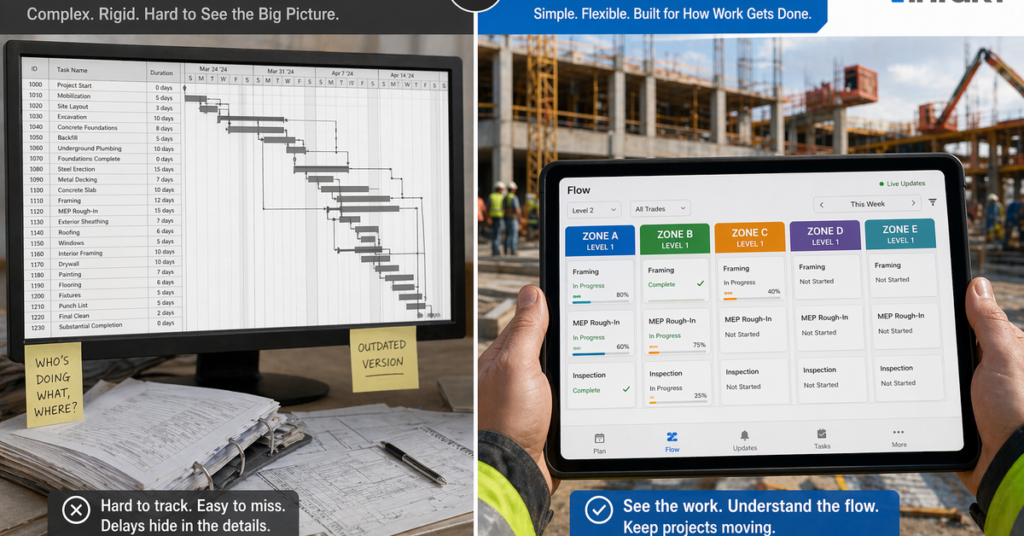
For decades, Gantt charts have been the default for construction scheduling. But on real jobsites, they often fall short. They show sequences, but they don’t create flow. They track tasks, but they don’t align teams.That’s why more construction teams are turning to Takt planning. Instead of focusing only on activities, Takt planning focuses on rhythm. It organizes work into zones and time intervals so crews can move consistently without stepping on each other.The difference is immediate. With tr

inTakt

April 24, 2026

How Lean Construction Scheduling Drives Faster, More Predictable Projects

Most construction delays don’t come from lack of effort—they come from lack of alignment. Teams work hard, but not always together. That’s where lean construction scheduling changes everything.Lean scheduling focuses on flow, not just tasks. Instead of treating a schedule like a checklist, it becomes a production system where every crew, every zone, and every phase is connected. The goal is simple: keep work moving without interruption.Traditional schedules often look good on paper but fail in t

inTakt

April 23, 2026

Why Real-Time Construction Scheduling Is the Future of Project Delivery

Construction is moving too fast for outdated schedules. Static plans, exported PDFs, and disconnected tools create delays before work even begins. The industry doesn’t need more reports—it needs real-time visibility.Real-time construction scheduling changes how projects are built. Instead of reacting to problems days later, teams see changes as they happen. When a crew falls behind, when materials are delayed, or when priorities shift, the schedule updates instantly across the entire project. Ev

inTakt

April 23, 2026

What Most Teams Get Wrong About Construction Planning

Most construction teams put a lot of effort into planning.They build detailed schedules, define activities, and map out timelines carefully. On the surface, it looks like everything is set up for success.But once execution begins, the plan starts to drift.Not because the team didn’t plan enough—but because they planned the wrong way.Traditional planning focuses heavily on tasks and durations. What needs to happen, and how long it should take. But it often overlooks how work actually moves throug

inTakt

April 22, 2026

Why Some Projects Feel Smooth—and Others Feel Like a Fight

Two projects can look similar on paper. Same size, similar scope, comparable teams.But in execution, they feel completely different.One feels like a constant fight. Every day brings new issues. Teams are adjusting, reacting, and working around problems just to keep progress moving.The other feels smooth. Work progresses steadily. Teams move in sequence. Problems still exist—but they don’t disrupt the entire system.The difference isn’t luck. And it’s not just experience.It’s structure.Projects th

inTakt

April 21, 2026

The Problem with “Updating the Schedule Later”

On many projects, schedule updates follow a familiar pattern.Something changes in the field. A delay, a shift in sequence, a new constraint. The team acknowledges it, adjusts informally, and plans to update the schedule later.Later becomes the end of the week. Or the next coordination meeting. Or sometimes not at all.In the meantime, the project keeps moving, but the schedule no longer reflects reality.This gap between what’s happening and what’s documented is where misalignment begins. Teams st