Category: What is Takt Scheduling

Explore articles, tips, and prospectives on construction scheduling, production flow, and improving project reliability. From tactical job-site ideas to broader planning concepts, out goal is simple: help teams build more predictable projects.

New ideas. Practical guidance. Continuous improvement

inTakt

February 3, 2026

Balancing Trade Workloads So the Takt Train Does Not Break

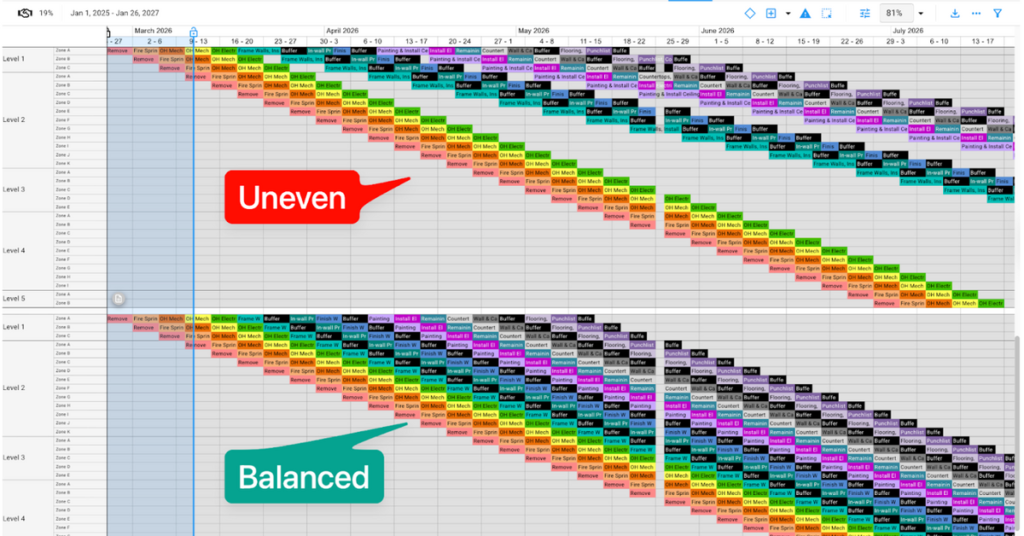
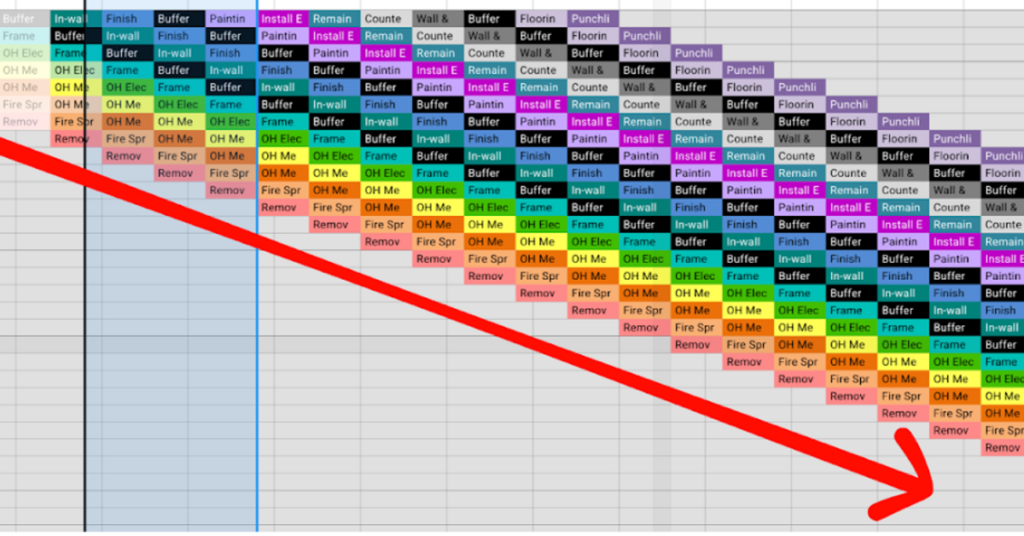
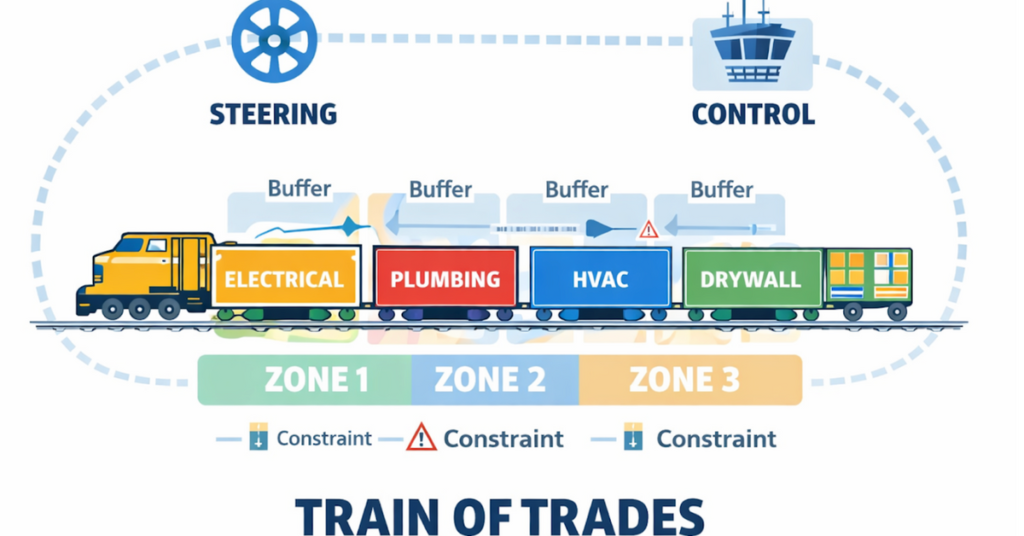
A Takt plan is a train. When one wagon is overloaded, the whole train slows down. In the field, overload looks like carryover work, late handoffs, and downstream crews working around incomplete areas just to stay busy.Balancing is not about making every trade happy. It is about creating a stable rhythm that the project can maintain. Stability is what prevents firefighting. If the same trade is always behind, the system is telling you something. Either the work is uneven, the zone is not truly re

inTakt

January 30, 2026

The Real Way to Pick Takt Time for Construction

Takt time is the heartbeat of your project. If the beat is wrong, everything downstream feels wrong, even if the plan looks clean on paper. The most common mistake is choosing a beat based on desire, like we want to hit one zone per week, instead of choosing a beat based on proven production capacity.A realistic Takt time comes from the work, the crew, and the conditions. It is a promise that each trade can complete their scope in a typical zone within the beat and hand off a truly ready work fr

inTakt

January 29, 2026

How Takt supports predictable handoffs between trades

Most delays do not start with a major failure. They start at handoffs, in the quiet gaps between trades. One crew finishes late because they were blocked, short staffed, or pulled to another area. The next crew shows up early because they are trying to stay productive and keep people working. Now you have two trades in the same space, incomplete conditions, and a choice that always creates waste: wait, work around, or start something else. That is how flow breaks. Not with one big event, but wit

inTakt

January 29, 2026

How to Size Zones for Takt Planning Without Guessing

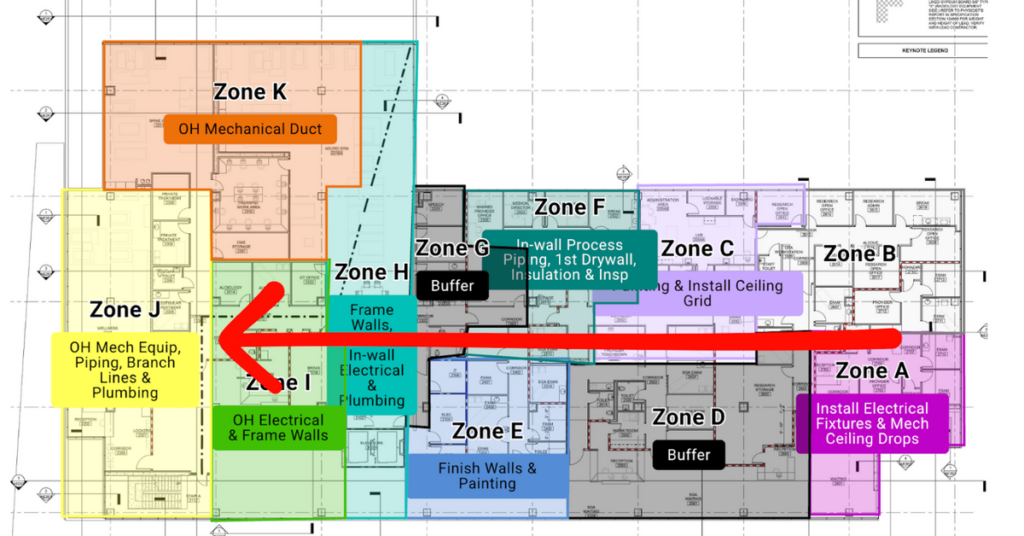
Most Takt plans do not fail because the team lacks effort. They fail because the zones were drawn in a way that does not match how work actually gets done. When zones are wrong, the plan becomes a constant negotiation, and negotiation is the enemy of flow.Zone sizing is not an architecture exercise. It is a production decision. A good zone is a repeatable work package that a trade can finish cleanly within the beat, with enough space to work safely and without forcing other trades into the same

inTakt

January 28, 2026

A simple visual: one week with Takt vs. one week with CPM

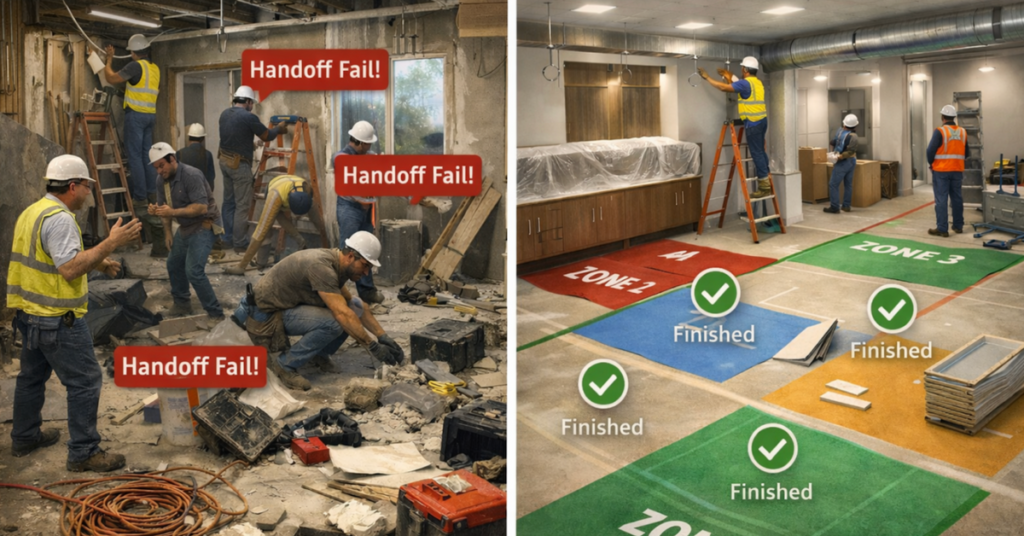
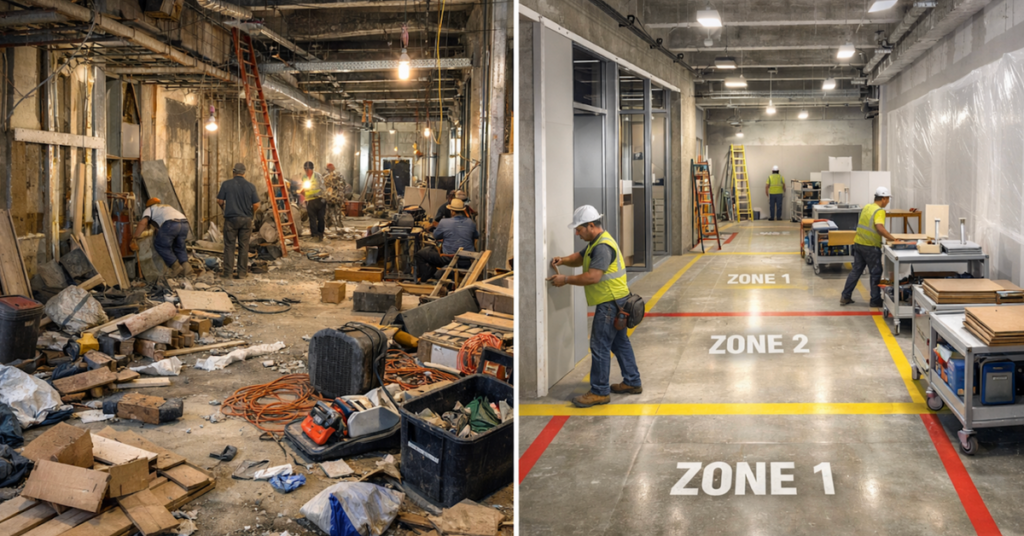
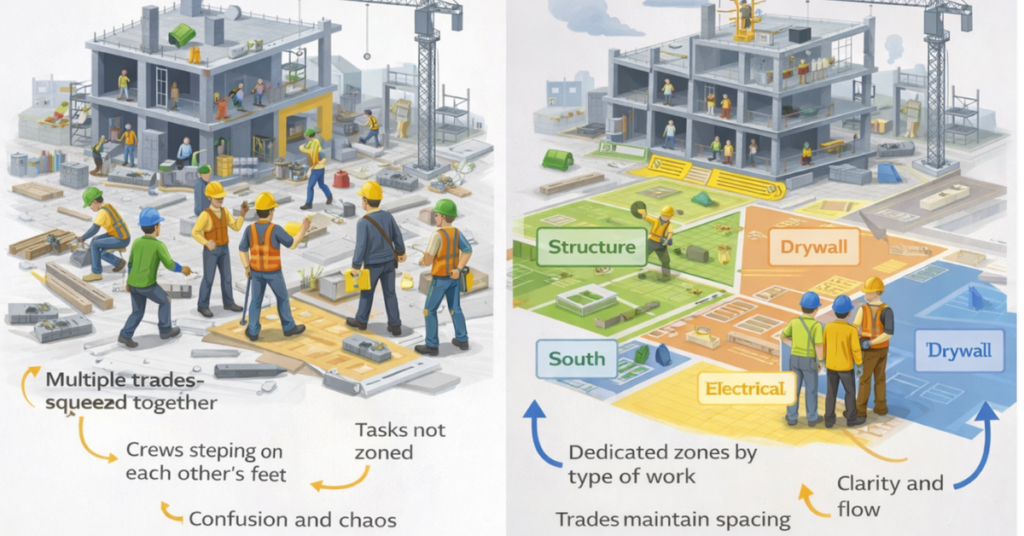
A CPM week often feels like a constant chase. Trades look for any open space they can work in, even if it is not the best sequence or the right time. Crews start tasks, get blocked by missing prerequisites, and jump to another area to stay “productive.” That stop start pattern creates partial completion everywhere, and partial completion is where most projects lose control. Handoffs fail because the next trade arrives to a zone that is not truly ready, so they improvise, work around, or leave an

inTakt

January 28, 2026

How Takt helps project teams communicate better

Most jobsite miscommunication is not about attitude or effort. It happens because teams are working from different mental pictures of the job. One trade thinks the priority is pushing production to “stay busy.” Another thinks the priority is clearing constraints. The superintendent is chasing milestone dates, while foremen are chasing whatever area is available. When the picture is different, the language is different too, and that is where confusion grows. People end up talking past each other

inTakt

January 27, 2026

Why Takt is not just a schedule — it’s a production control system

A schedule predicts what should happen. A production system controls what actually happens. Most construction schedules are built like forecasts, assuming the job will follow the intended sequence if everyone just works hard enough. But the field does not run on predictions. It runs on conditions, access, readiness, and reliable handoffs. That is why Takt is more than a planning method. It is a way to build control into the way the job moves, so flow becomes something you manage, not something y

inTakt

January 27, 2026

How to combine Takt with the Last Planner System®

Takt and the Last Planner System® were never designed to compete for the same space on a project. They solve different problems at different levels, and when you connect them, you get something construction teams rarely experience: a plan that is both strategically sound and reliably executable. Takt brings structure to production by defining the “where” and “when” of work. It lays out zones, sequence, rhythm, and buffers so trade movement becomes predictable instead of reactive. That predictabi

inTakt

January 26, 2026

Why buffer zones matter in Takt plans

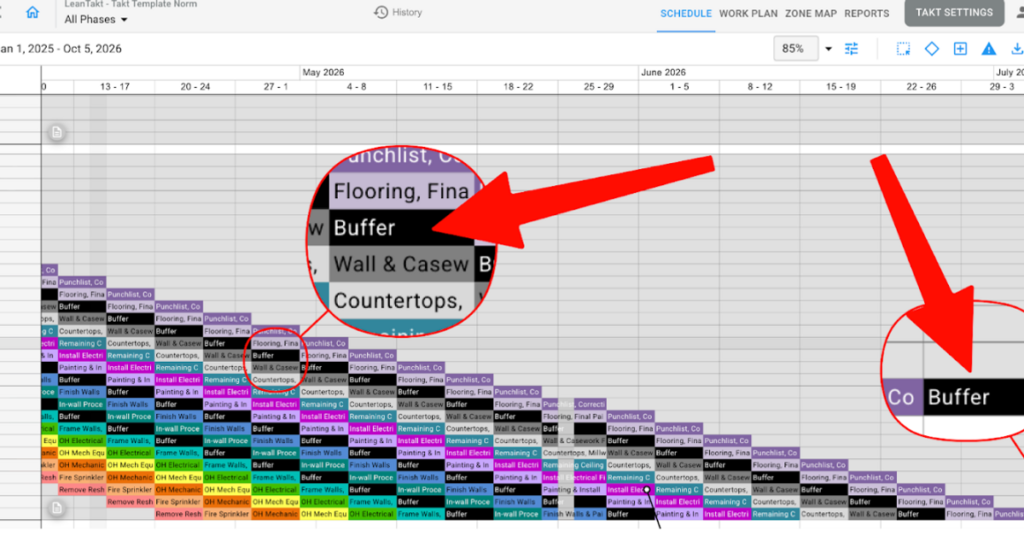
No construction project runs perfectly, and pretending it will is how schedules get brittle. Takt planning accepts reality and builds a production system that can handle it. Weather shifts, inspections slip, deliveries show up late, and crews hit unknown conditions. The goal is not to pretend those things will not happen. The goal is to keep small problems from turning into project wide chaos.That is why buffers are not waste. They are protection. In a Takt plan, buffers exist to absorb small de

inTakt

January 26, 2026

3 signs your project needs a Takt plan

Not every project starts with Takt, but many projects reach a point where the usual fixes stop working. Teams add meetings, push harder, increase supervision, and chase updates, yet the job still feels crowded and unpredictable. That is often the moment when the project is no longer suffering from a communication problem. It is suffering from a production problem. Takt becomes necessary when the project needs a system that stabilizes flow instead of constantly reacting to disruption.One clear si