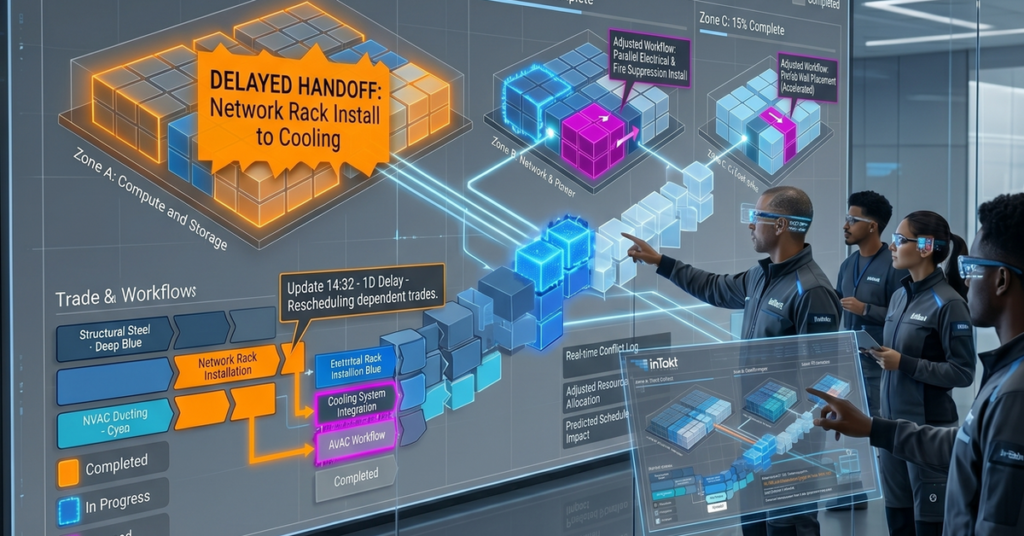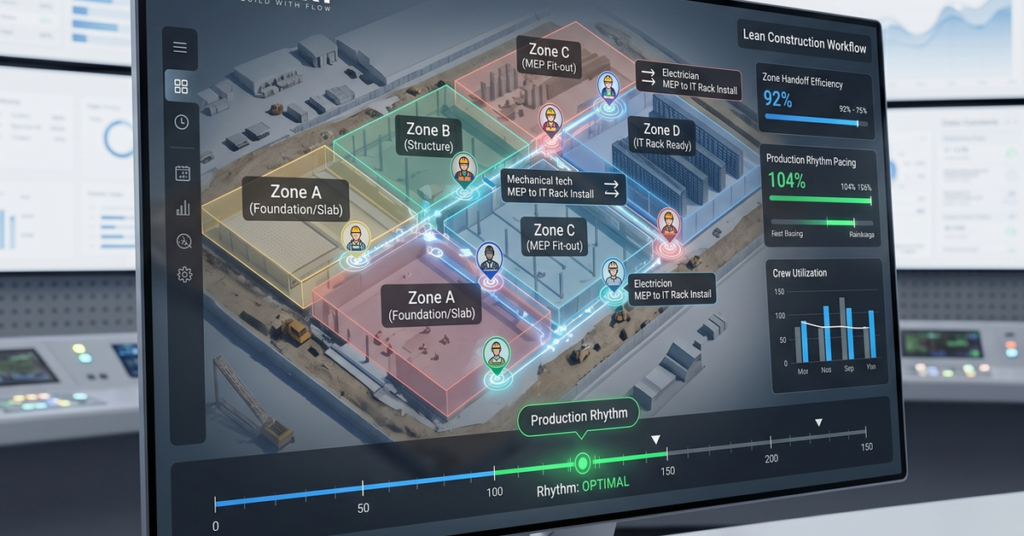
When handoffs are unstable, the jobsite becomes a game of guessing. Foremen spend their mornings walking the building trying to find “ready” work. Superintendents spend their afternoons negotiating access and resequencing priorities. Crews get frustrated because they are measured by activity, but punished by conditions they do not control. The schedule may still look reasonable, but production becomes unpredictable because the real plan is changing on the fly at every transition point.
Takt fixes handoffs by making completion and readiness explicit, not assumed. Clear zone completion means everyone agrees on what “done” looks like before the next trade enters. It is not “mostly finished” or “good enough to start.” It is a defined finish line that protects quality and prevents downstream crews from inheriting problems. Aligning finish and start times creates a reliable cadence so the next trade is not arriving into uncertainty. Space buffers add protection so minor delays do not instantly turn into trade stacking and interference. And because the plan is visual, expectations are visible to everyone, not trapped inside a spreadsheet or a superintendent’s head.
Once expectations are visible, trades stop guessing. They know when a zone is supposed to be ready, what conditions must be met, and what happens if something is at risk. That clarity changes behavior in a powerful way. Instead of showing up early and hoping they can squeeze in, crews flag constraints sooner. Instead of leaving incomplete work and expecting the next trade to “figure it out,” teams close the zone properly because the handoff is a real commitment, not a casual transition.
Predictable handoffs create trust because they remove the daily uncertainty that drives defensive behavior. Trades stop protecting themselves and start protecting the system. Trust creates flow because crews can plan manpower, materials, and quality around a stable sequence. And flow is what finishes projects, not heroic effort. When handoffs are dependable, progress becomes repeatable, problems surface earlier, and the job stops burning time in the gaps between “finished” and “ready.”