Category: What is Takt Scheduling

Explore articles, tips, and prospectives on construction scheduling, production flow, and improving project reliability. From tactical job-site ideas to broader planning concepts, out goal is simple: help teams build more predictable projects.

New ideas. Practical guidance. Continuous improvement

inTakt

January 16, 2026

How Takt makes planning visual, predictable, and team-friendly

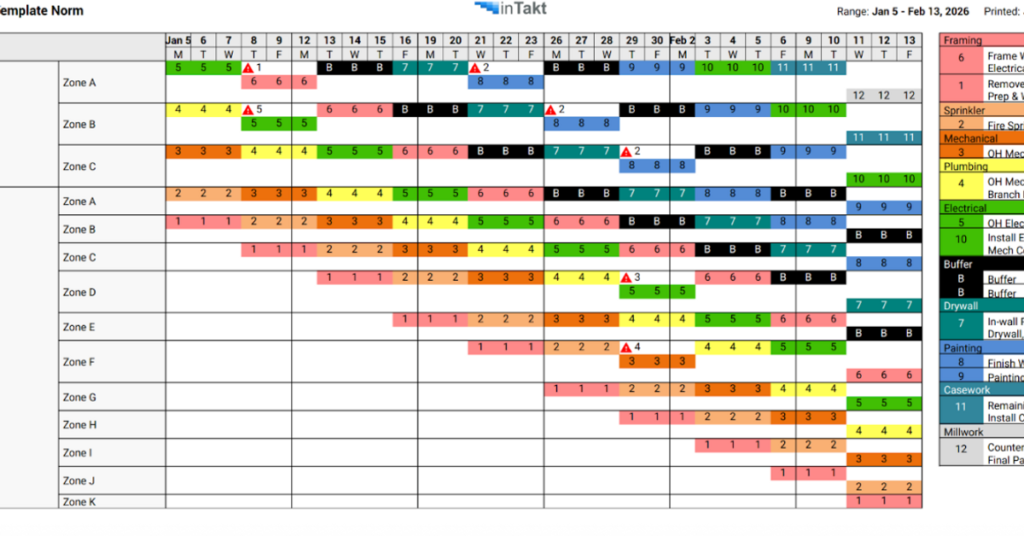
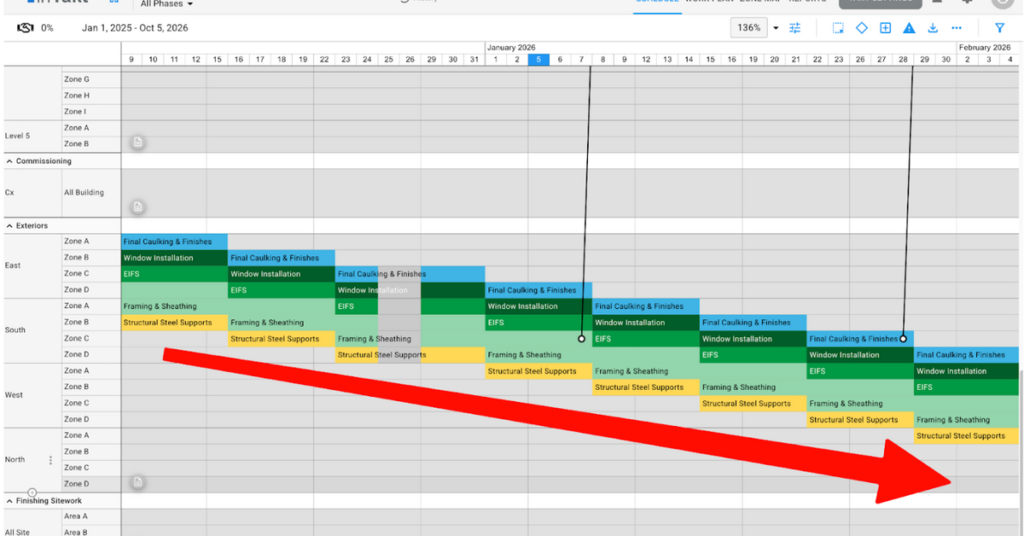
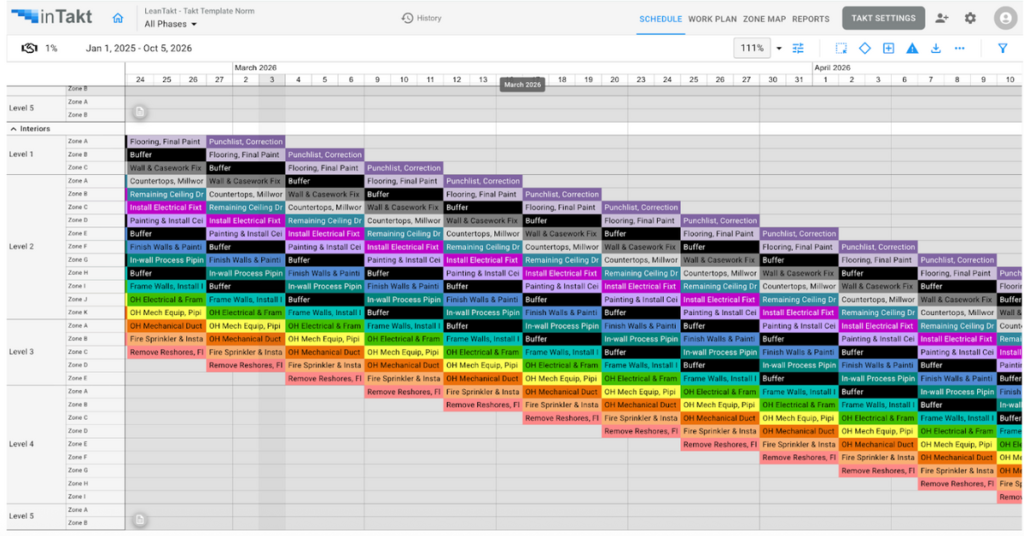
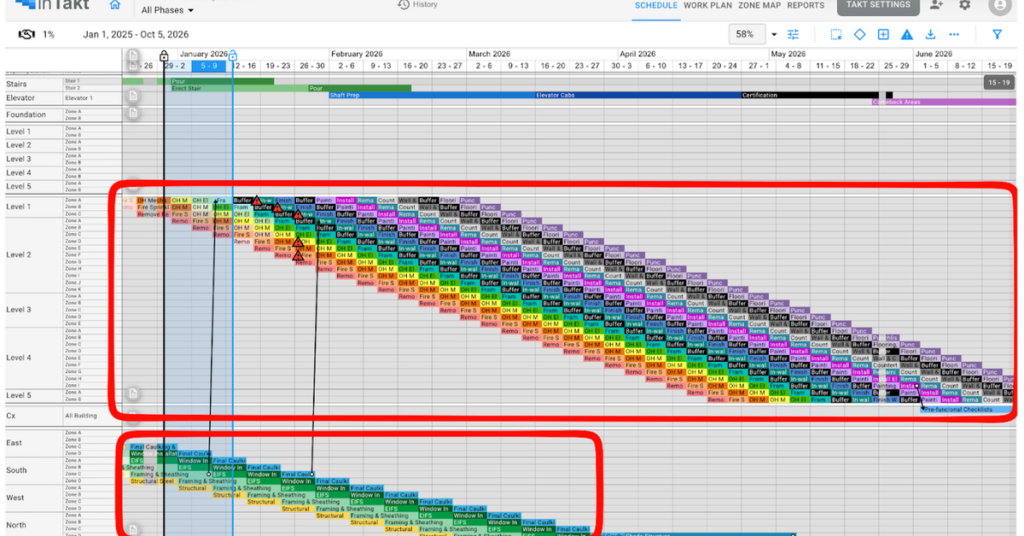
Most schedules fail because crews can’t see the plan.Takt changes that.A Takt plan shows:Where each trade is workingWhen they moveWho comes nextThe diagonal flow makes problems visible early:GapsCollisionsDelaysMissed handoffsBecause the plan is visual, teams don’t argue about it — they work with it.Takt turns scheduling from an office exercise into a shared field language.That’s what makes it predictable.That’s what makes it team-friendly.

inTakt

January 15, 2026

The “heartbeat” of a project: what Takt time really means

Takt time is often misunderstood as a deadline.It’s not.Takt time is the heartbeat of the project — the steady rhythm that tells trades when to move, not when to panic.A good Takt time:Matches real production capacityAllows work to finish with a small bufferKeeps trades moving at the same paceWhen Takt time is wrong, you see it immediately:Too short → variation, delays, stressToo long → wasted time, loss of urgencyThe goal isn’t speed.The goal is consistent, repeatable flow.When the heartbeat is

inTakt

January 14, 2026

The origin of Takt: how it started in manufacturing and evolved for construction

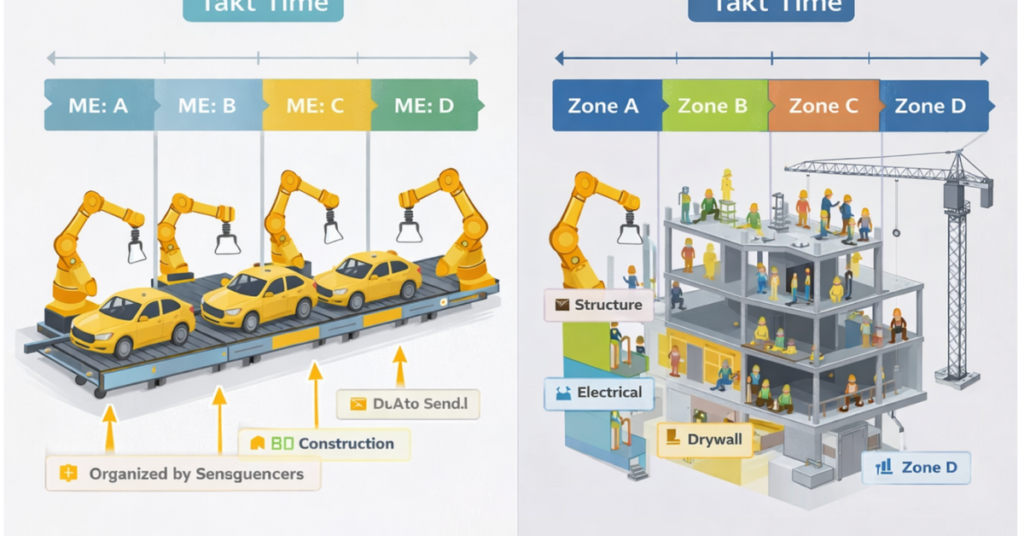
Takt comes from manufacturing — where products move through workstations at a set rhythm.Same speed.Same spacing.Same expectations.Construction borrowed the concept — but adapted it to reality.Instead of products, we move crews.Instead of stations, we use zones.Instead of machines, we manage people, space, and variability.The result is the Takt Production System® — combining planning, steering, and control to maintain flow in the field.Takt isn’t theory.It’s manufacturing discipline — translated

inTakt

January 13, 2026

Understanding location-based scheduling in 60 seconds

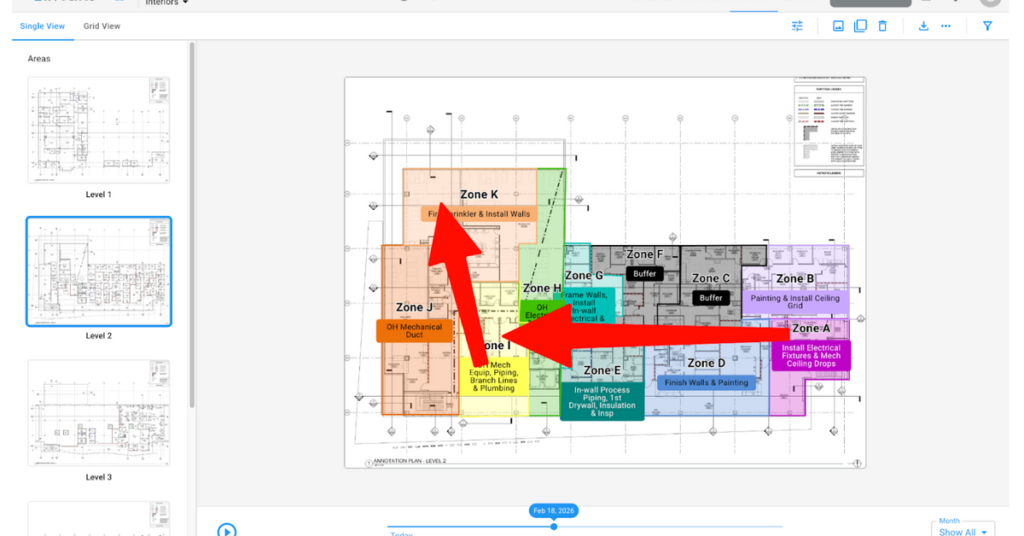
Location-based scheduling organizes work by where it happens — not just what happens.Instead of tracking hundreds of activities, the project is divided into zones sized by work density. Trades move zone to zone in a planned sequence.Why it matters:Crews know where they work nextSpace conflicts disappearProgress becomes visibleTakt planning uses location-based scheduling to connect time and space — creating a visual production plan anyone can understand.If you can’t see work moving across zones,

inTakt

January 12, 2026

Why flow is more important than speed in construction

Construction doesn’t fail because teams are slow.It fails because work stops and starts.Speed without flow creates: • Waiting • Rework • Trade collisions • Burned-out crewsFlow means work moves steadily, predictably, and continuously through zones. When trades move at the same pace and maintain distance, productivity stabilizes.Takt planning prioritizes: • Consistent crew movement • Balanced work packages • Protected handoffsWhen flow exists, speed becomes a byproduct — not a demand.The fastest

inTakt

January 9, 2026

CPM vs. Takt: what’s the real difference

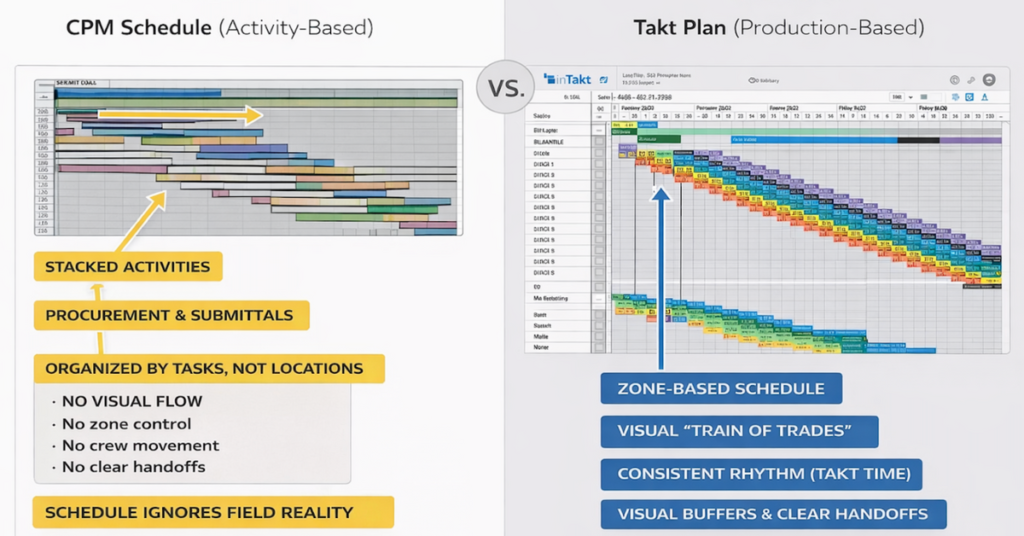
CPM asks one question: What’s the longest path of activities?Takt asks a better one: How do we create flow?CPM schedules are activity-based and optimized on paper. They batch work, ignore capacity, and push milestones downstream to the field.Takt schedules are production-based. They align work to zones, crews, and time, making the plan executable where work actually happens.Here’s the real difference:CPM:Optimizes logic, not flowEncourages trade stackingBreaks down in the fieldTakt:Aligns work t

inTakt

January 8, 2026

What is Takt Scheduling — and why projects that use it finish smoother

Takt scheduling is not just a different way to draw a schedule — it’s a different way to run production.Instead of pushing trades wherever space is available, Takt scheduling organizes work into zones, sets a consistent rhythm (Takt time), and moves trades through the project like a train of crews. Same speed. Same sequence. Same expectations.When projects don’t use Takt, work stacks up. Trades collide. Crews rush, wait, or rework. The project finishes — but not smoothly.With Takt scheduling, fl

inTakt

September 23, 2022

ALL ABOUT THAT TAKT (PART 2)

In this post, we cover what makes a Takt plan, and the steps to take in order to construct your own.

inTakt

August 4, 2022

ALL ABOUT THAT TAKT (PART 1)

Everything you could ever want to know about Takt planning, including background and differences from traditional construction planning.
Visual representation of the 5 Whys root cause analysis method applied in lean construction

inTakt

May 20, 2022

Do the 5 Whys Actually Belong in Lean Construction?

Since people are the cornerstone of lean construction, every method relies on creating rapport and trusting, open relationships. When individuals on a team are defensive and standoffish, they aren’t able to come together to strategize. Innovation and the concept of lean is based on a safe, inviting environment where ideas and constructive criticism are fostered. Use of the word ‘why’ defies this logic and is inherently accusatory.