Takt Planning for Renovations and Active Buildings

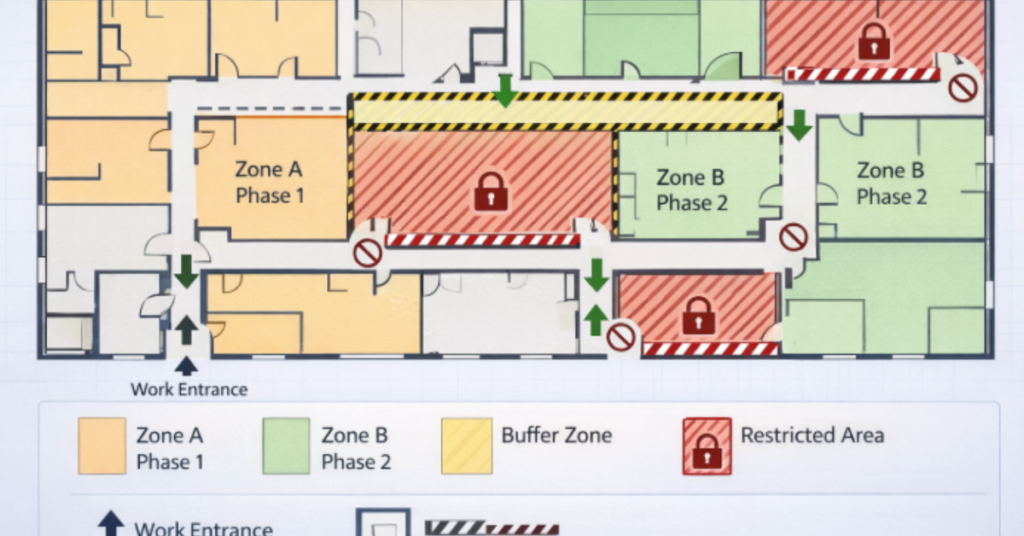
The first shift is how you think about zones. In renovations, zones are not only about scope density. They are also about disruption control. Noise, dust, shut downs, and access routes matter as much as square footage. A good renovation zone contains impact so the building can keep functioning while crews work.

Next is sequencing for containment. Trades cannot freely spread out across the building without creating safety and disruption problems. A Train of Trades gives you controlled movement. Crews know where they are allowed to be, and the plan protects them from overlapping trades that would otherwise cause interference.

Buffers are even more important in renovations because unknowns are normal. When you open walls, reality shows up. The goal is not to pretend you can eliminate surprises, the goal is to prevent one surprise from collapsing the whole phase. Planned buffers near high risk areas help you absorb discovery work while keeping downstream flow intact.

Readiness planning must include owner coordination. Access permissions, after hours work, infection control requirements, and communication to occupants become part of the constraint list. If the owner needs forty eight hours notice, that is a constraint. If a shutdown requires special approval, that is a constraint. Treat these like material and inspections, not like side conversations.

A tool like inTakt can help keep renovation constraints tied to zones, so the team sees where the next work front is and what must be true before entering. In occupied buildings, clarity is not optional. It is the difference between smooth work and constant stoppage.

When renovation Takt is done well, the project feels more respectful. Respectful to the occupants, because disruption is contained. Respectful to trades, because work fronts are clear. Respectful to the schedule, because surprises are managed instead of amplified.
Share

Recent Posts

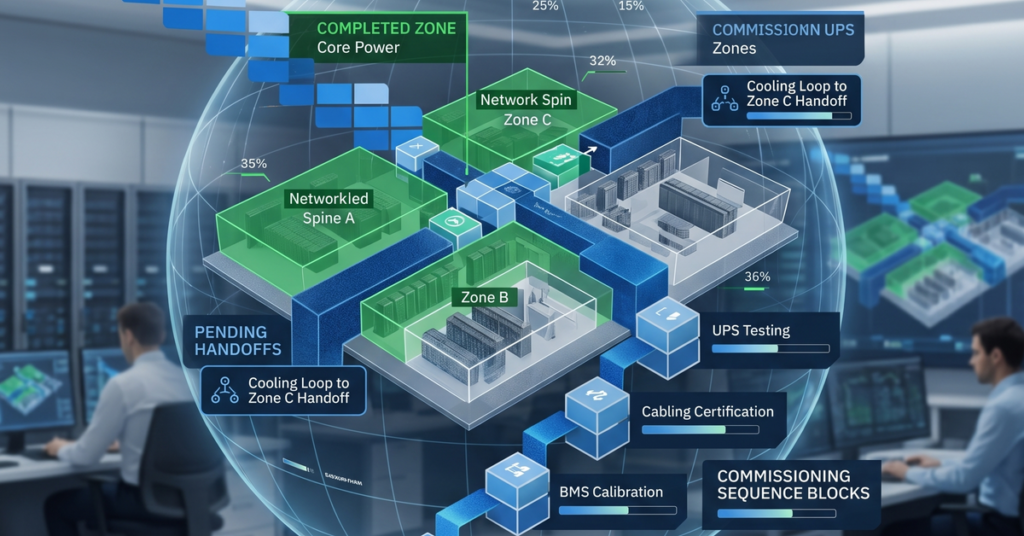
Data center commissioning zone map showing completed zones, pending handoffs, and commissioning sequence blocks

inTakt

June 5, 2026

How Takt Planning Supports Faster Data Center Commissioning

Commissioning is one of the most critical phases of data center construction. It is also one of the most schedule-sensitive. By the time a project reaches commissioning, every upstream delay matters. Incomplete rooms, missing equipment, unfinished systems, failed inspections, or unresolved punch items can all slow down testing and turnover. The problem usually begins earlier. If construction work does not flow properly through the building, commissioning teams inherit the consequences….

inTakt

June 4, 2026

Why Data Center Construction Needs Real-Time Schedule Visibility

Data center projects change quickly. A delivery shifts. A room is not ready. A trade finishes early. A commissioning activity reveals an issue. A constraint appears in a critical area. When that happens, teams need visibility immediately. Traditional schedules often lag behind field reality. By the time updates are collected, reviewed, entered, and redistributed, the jobsite may have already moved on. That delay creates confusion. Some teams work from the old plan. Others work from verbal…

inTakt

June 3, 2026

How Lean Construction Planning Improves Data Center Delivery

Data centers demand predictable delivery. But predictability is difficult when teams rely only on traditional scheduling methods. These projects include complex systems, aggressive deadlines, high-quality expectations, and many specialized trade partners. Every delay creates a chain reaction. Lean construction planning helps teams reduce that uncertainty. Instead of focusing only on task completion, lean planning focuses on workflow reliability. The goal is to reduce waste, improve handoffs,…

More Than Logic. Built for Production.

Traditional CPM tools manage activities and relationships. If you run full Takt, you’ll love it! If you run traditional CPM, you’ll wonder why your software never did this before.