Traditional schedules often struggle in multifamily projects because they organize work primarily by activity instead of location. Crews end up jumping between units or floors trying to stay productive, which leads to incomplete work and messy handoffs. That pattern slows production even when the schedule technically shows progress.
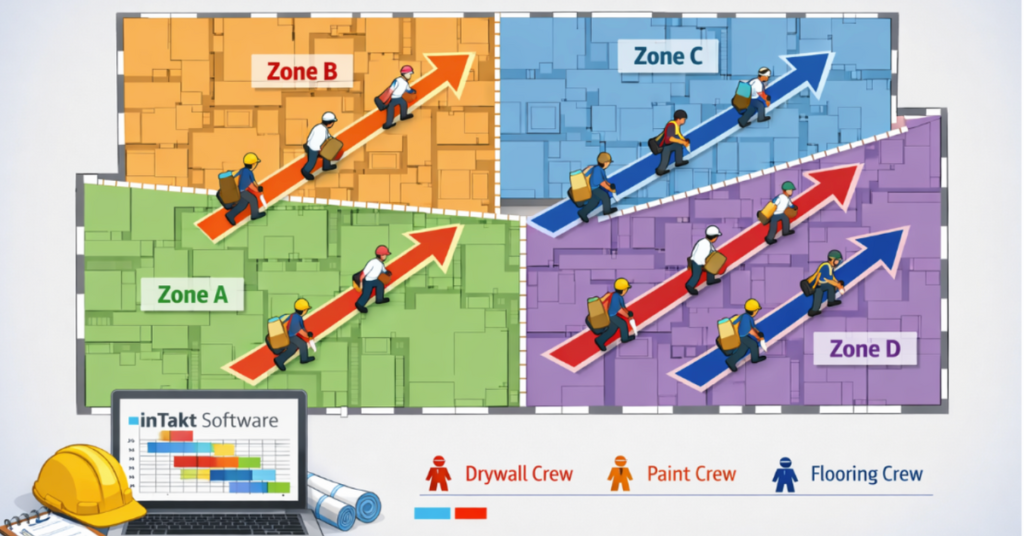
Takt Planning changes this by aligning the work to zones and sequences. Instead of spreading work across the entire building, trades move unit by unit or zone by zone in a consistent pattern. Each crew finishes their work in one area before moving forward. This rhythm helps the entire project maintain a steady pace.
The real advantage comes when work density is used to size zones instead of simple square footage. Some units require more effort because of mechanical complexity or layout differences. When zones are sized around the amount of work instead of only physical area, the rhythm becomes much more stable.
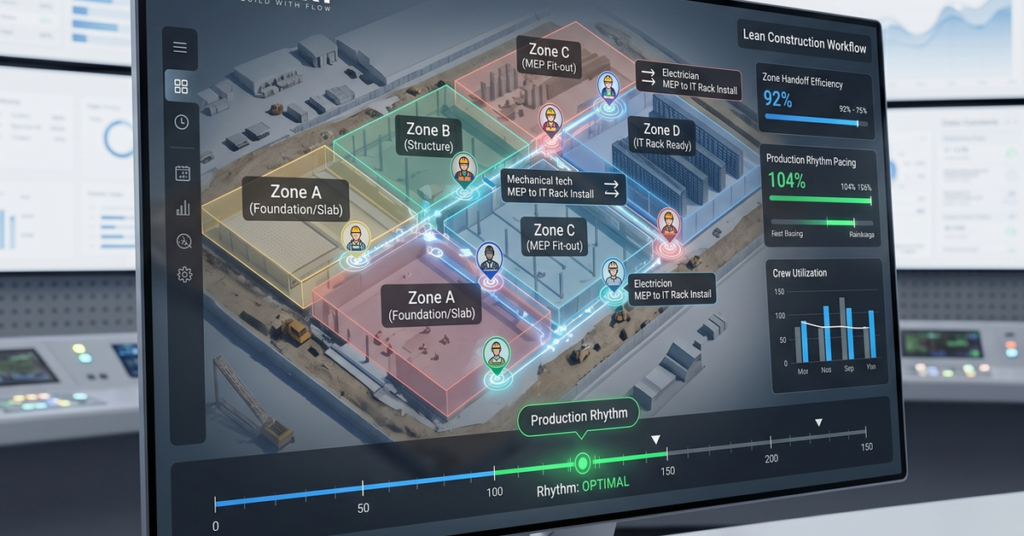
inTakt helps teams manage this approach by keeping zones, sequences, and trades visible in one shared schedule. The result is a multifamily project that feels organized and predictable rather than chaotic.