Category: Multi-train Scheduling

Explore articles, tips, and prospectives on construction scheduling, production flow, and improving project reliability. From tactical job-site ideas to broader planning concepts, out goal is simple: help teams build more predictable projects.

New ideas. Practical guidance. Continuous improvement
inTakt

March 9, 2026

Who Should Know About Multitrain

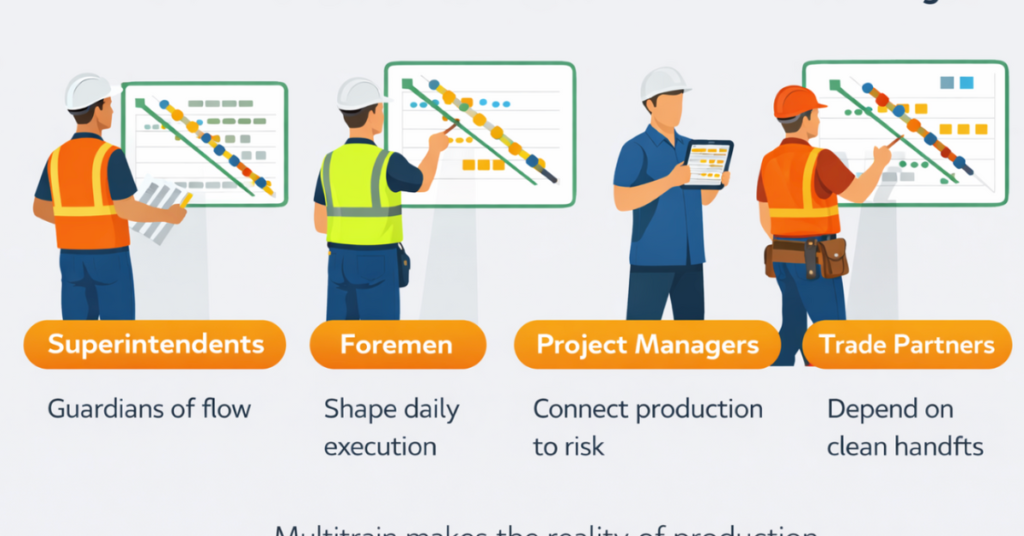
Multitrain is not just for schedulers. It is for the people who feel the consequences of a bad plan. When flow breaks, the superintendent gets pulled into constant resequencing, foremen lose productive time, and project managers spend their days explaining misses instead of preventing them.Superintendents should know multitrain because they are the guardians of flow. They coordinate access, logistics, and handoffs. A multitrain view helps them see where conflict is coming, where readiness is wea

inTakt

March 6, 2026

How Does a Multi Train Look in Real Life

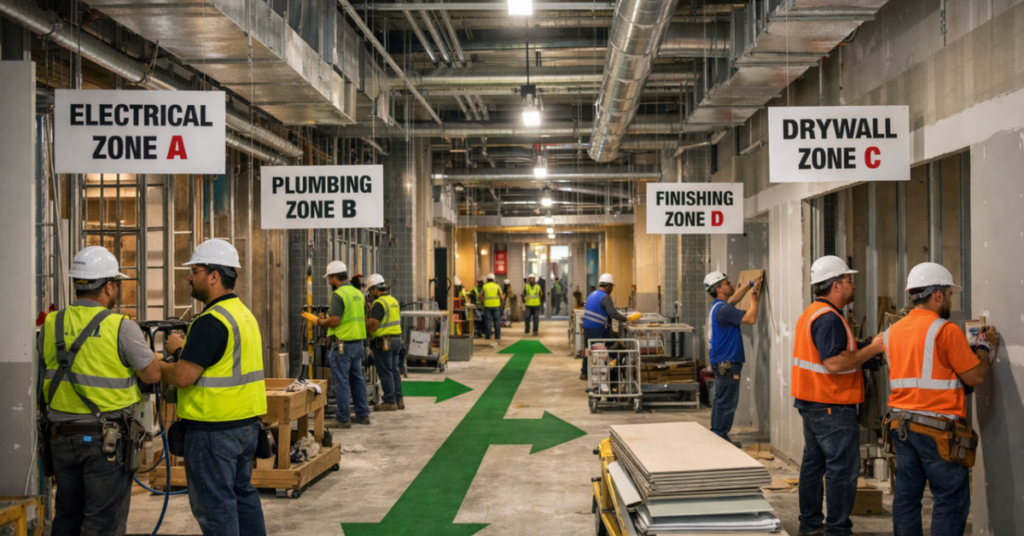
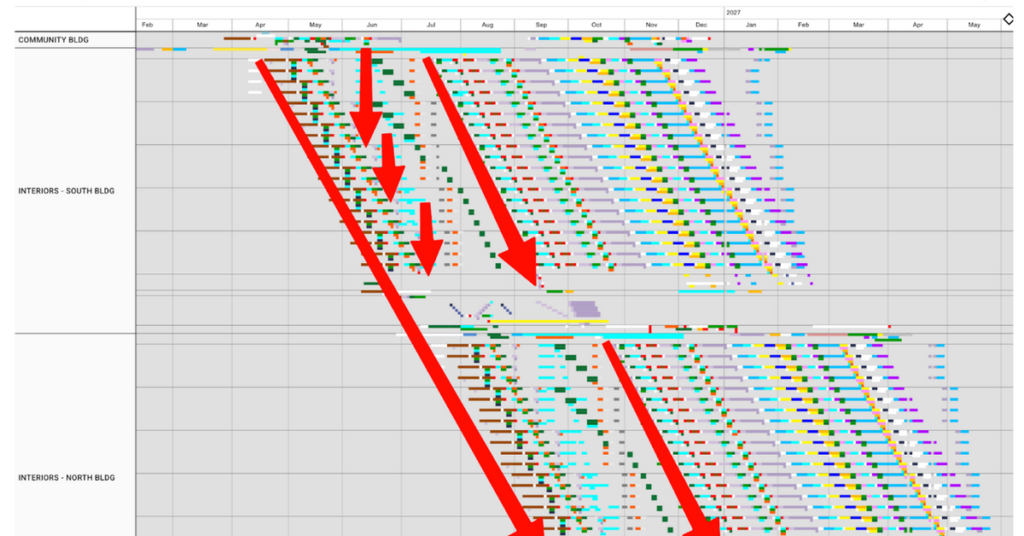
In real life, a multitrain project looks organized in a way that is hard to describe until you see it. Crews are not scattered everywhere. They are concentrated in the zones they are supposed to be in, working to a clear finish line instead of stretching work across the floor.You can walk the project and predict what is happening. You can see one train working through a defined area while another train progresses in a different area, each with its own rhythm. Instead of chaos, you see controlled

inTakt

March 5, 2026

How Multitrain and Wagons Tie Together

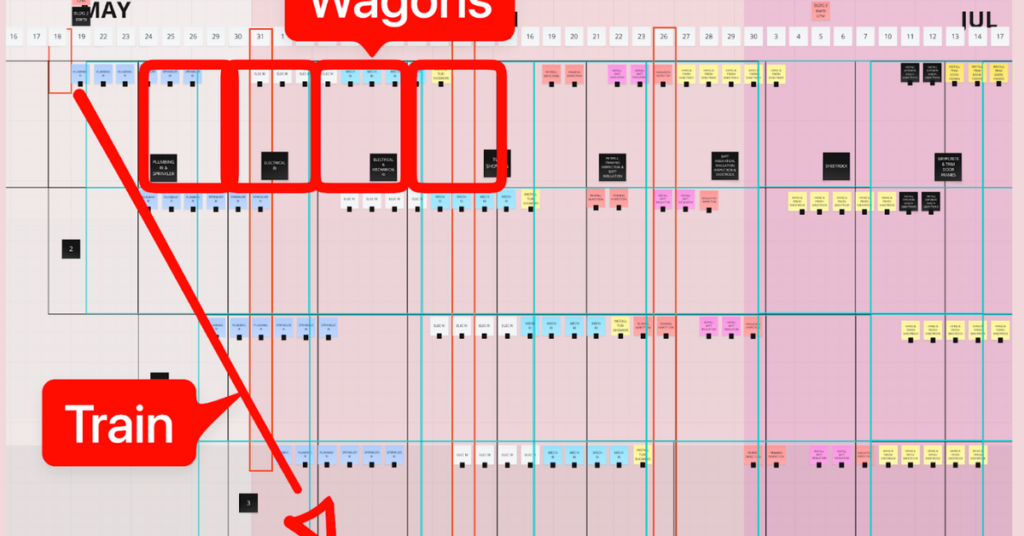
A train is the movement of trades through zones. Wagons are the repeatable work packages that make that movement possible. If the train is the flow, the wagons are the structure that keeps the flow consistent.A wagon represents a defined chunk of work that a trade can complete in a zone within the beat. When wagons are defined well, the train advances cleanly. When wagons are defined poorly, the train drags, because work is uneven, completion is unclear, and handoffs become subjective.In the IPC

inTakt

March 4, 2026

Why Multitrain Shows the Reality of Your Schedule

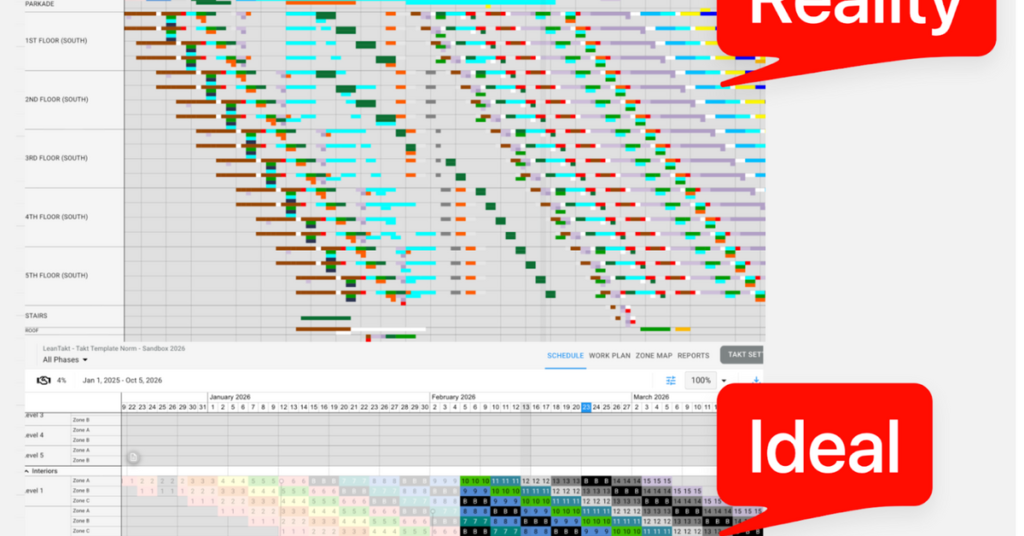
A schedule can look healthy and still be lying. It can show progress while zones are half done, trades are stacked, and crews are walking the building searching for something ready. That mismatch is why teams lose trust in schedules.Multitrain shows reality because it forces the plan to represent flow. When you can see trains moving through zones, you can see whether the building is being finished in a controlled sequence or being touched in scattered fragments. Reality is not how many tasks are

inTakt

March 3, 2026

Buffers and Multitrains

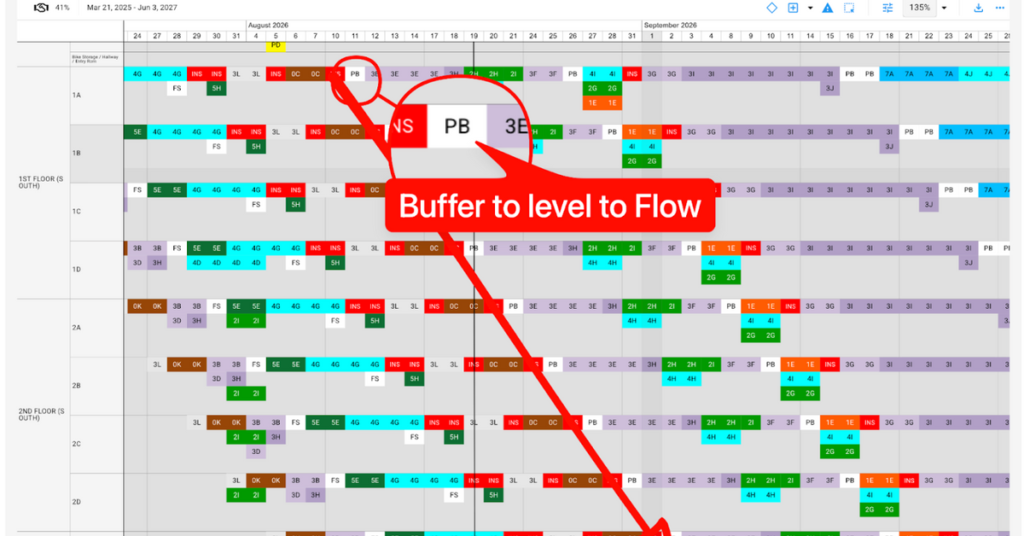
When you run multiple trains, the biggest threat is not a single delay. The biggest threat is a delay that spreads. Multitrain schedules can be highly productive, but only if they have protection where trains intersect, share access, or depend on the same readiness gates.Buffers are that protection. A buffer is not an excuse to waste time. It is planned recovery capacity that allows the train to stay stable when reality shows up. Without buffers, small disruptions turn into trade stacking, skipp

inTakt

March 2, 2026

How to Optimize a Train

A train does not break because people stop working hard. It breaks because the system stops supporting clean movement. Optimization starts by identifying where the rhythm is failing, not where the schedule looks ugly.The first place to look is the constraint. Every train has a trade or scope that sets the pace, often because the work is dense, inspections are heavy, or access is limited. If the constraint cannot finish inside the beat, the train will drift no matter how much you pressure downstr

inTakt

February 27, 2026

Multi Train Meaning

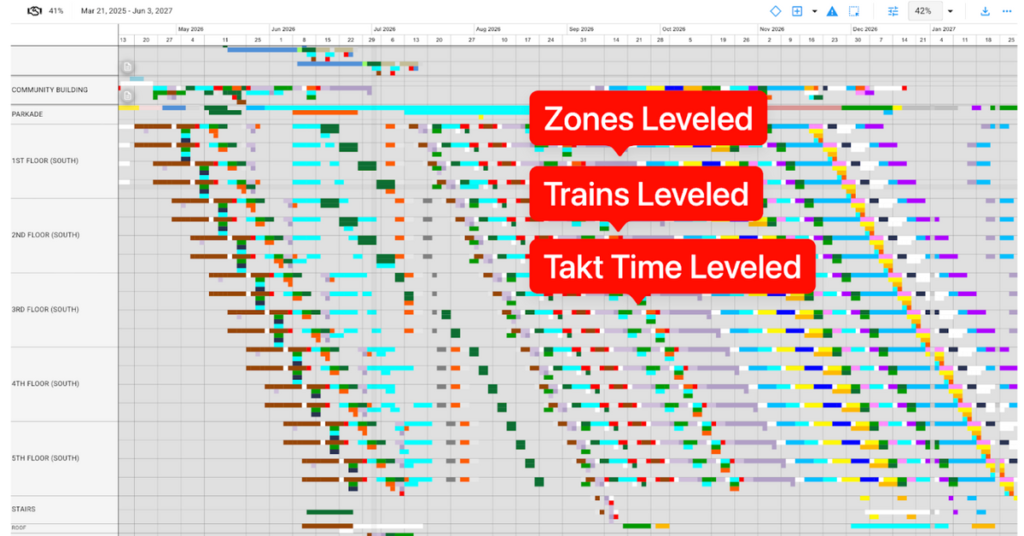
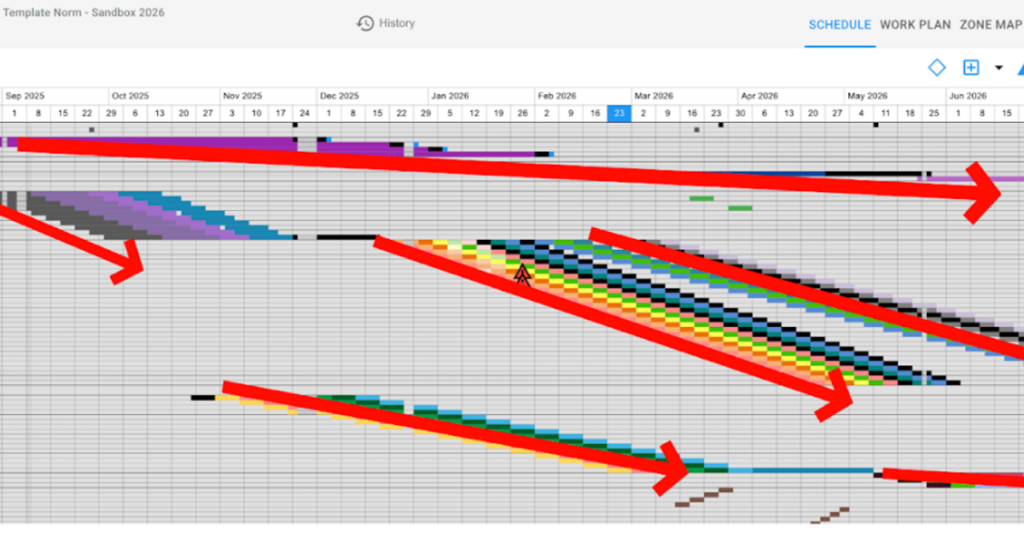
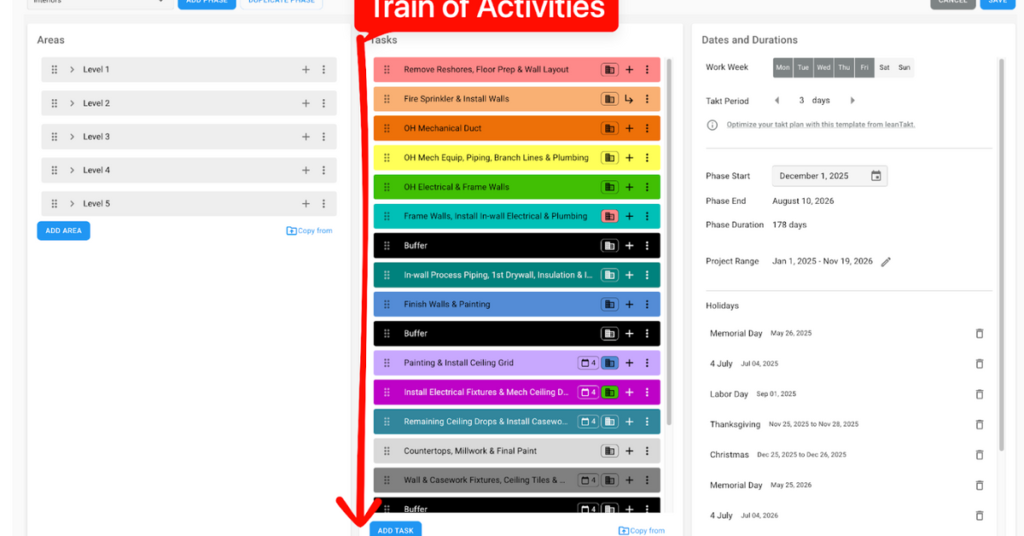
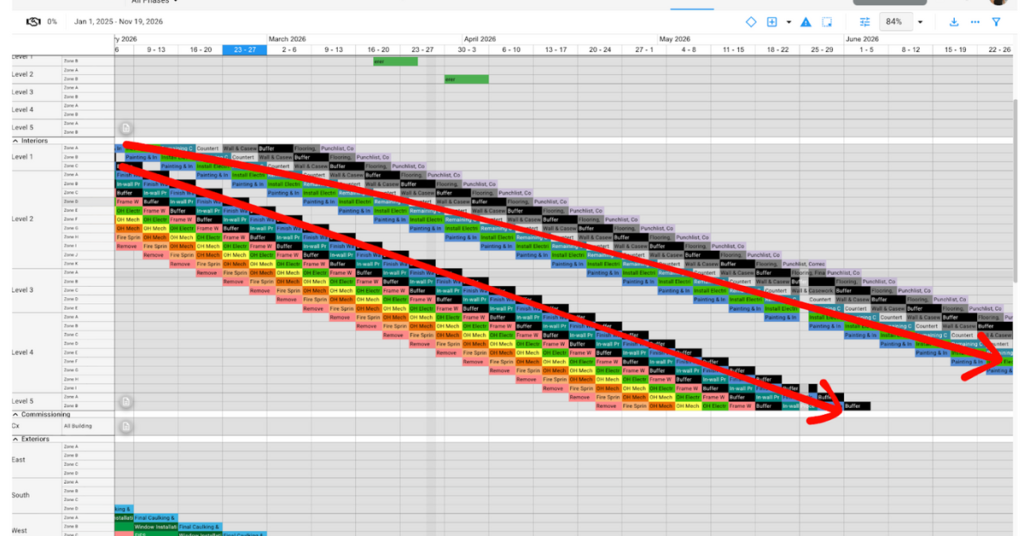
Multitrain is a simple idea with big impact. It means you are not running one single train of trades across the whole project. You are running multiple trains that move through the building with intention, often by area, phase, system, or priority.A train is a sequence of trades moving through zones in time. Multitrain recognizes that projects do not behave as one uniform line. Different areas have different constraints, different density, different inspection pacing, and different risk. Multitr
inTakt takt schedule showing multiple production trains with flow annotations for construction scheduling

inTakt

February 26, 2026

Why Understanding The Overall Trains In Your Schedule Helps You Optimize It

Understanding overall trains changes how you see risk. Instead of focusing on a single late task, you see whether a whole train is losing rhythm. You can see if a trade is consistently behind, if a zone type is creating repeated carryover, or if handoffs are degrading because completion is not consistent. In the IPCS […]
inTakt

February 25, 2026

How inTakt Supports Schedules Built by Trains

Train-based schedules only work when the entire team can see the same production picture. If the plan lives in one person’s file, the field ends up running on side conversations, screenshots, and outdated exports. That is where train logic gets lost and the job drifts back into reactive work.inTakt supports train-based scheduling by keeping the plan visual and shared. When the schedule is built around zones and flow, the team can understand it quickly because it matches how they walk the project

inTakt

February 24, 2026

Why Schedules Work Better with Multitrain

Most schedules look fine until the job starts moving. That is when the plan gets tested by access, readiness, inspections, and the simple truth that trades do not move in straight lines. A schedule that cannot show movement clearly forces the team to guess, and guessing is where flow breaks.Multitrain works better because it represents production the way the field experiences it. Instead of treating each activity like an isolated bar, multitrain groups work into trains that move through zones wi