Who Should Know About Multitrain

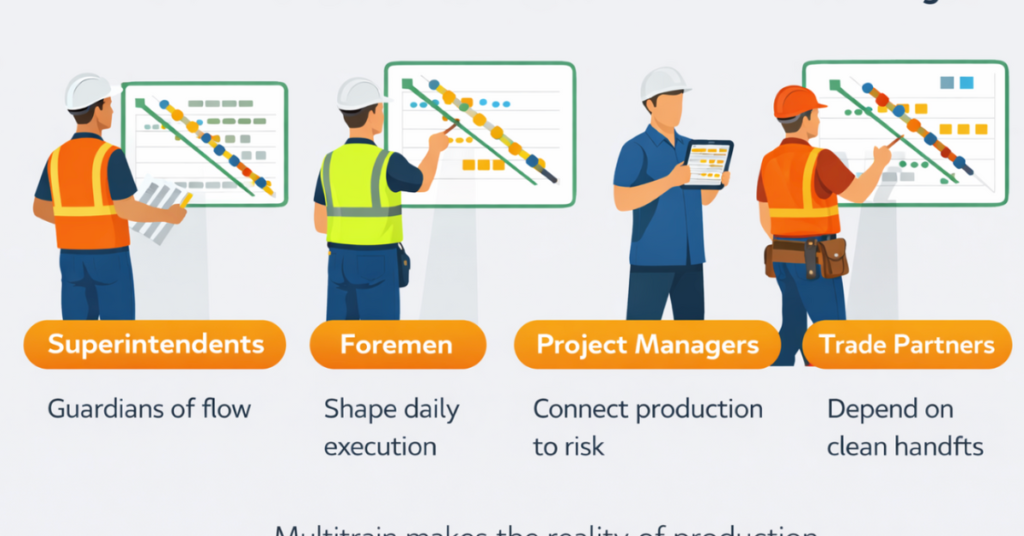
Superintendents should know multitrain because they are the guardians of flow. They coordinate access, logistics, and handoffs. A multitrain view helps them see where conflict is coming, where readiness is weak, and what must be protected to keep the train moving.

Foremen should know multitrain because it shapes daily execution. A foreman does not need theory. They need clarity about where their crew should be, what done means, and what prerequisites must be in place before they enter a zone. Multitrain makes that clarity easier to share across trades.

Project managers should know multitrain because it connects production to risk. It reveals where procurement, approvals, and long lead constraints will impact the field. In the IPCS system, this link between planning and control is what prevents late surprises.

Trade partners should know multitrain because it protects them. A stable train reduces stacking, reduces rework, and creates predictable work fronts. When the whole team understands multitrain, the project stops relying on heroics and starts relying on a production system that makes success repeatable.
Share

Recent Posts

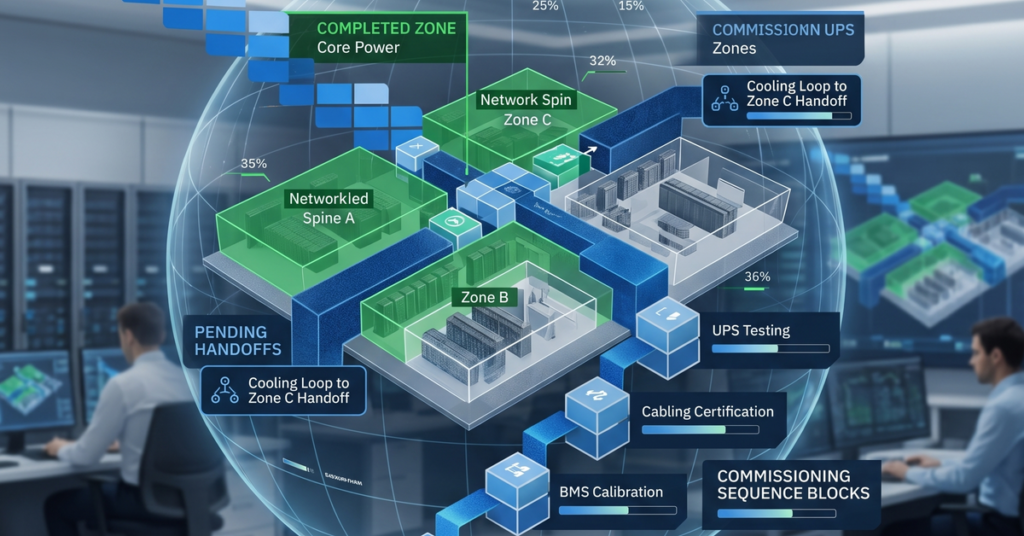
Data center commissioning zone map showing completed zones, pending handoffs, and commissioning sequence blocks

inTakt

June 5, 2026

How Takt Planning Supports Faster Data Center Commissioning

Commissioning is one of the most critical phases of data center construction. It is also one of the most schedule-sensitive. By the time a project reaches commissioning, every upstream delay matters. Incomplete rooms, missing equipment, unfinished systems, failed inspections, or unresolved punch items can all slow down testing and turnover. The problem usually begins earlier. If construction work does not flow properly through the building, commissioning teams inherit the consequences….

inTakt

June 4, 2026

Why Data Center Construction Needs Real-Time Schedule Visibility

Data center projects change quickly. A delivery shifts. A room is not ready. A trade finishes early. A commissioning activity reveals an issue. A constraint appears in a critical area. When that happens, teams need visibility immediately. Traditional schedules often lag behind field reality. By the time updates are collected, reviewed, entered, and redistributed, the jobsite may have already moved on. That delay creates confusion. Some teams work from the old plan. Others work from verbal…

inTakt

June 3, 2026

How Lean Construction Planning Improves Data Center Delivery

Data centers demand predictable delivery. But predictability is difficult when teams rely only on traditional scheduling methods. These projects include complex systems, aggressive deadlines, high-quality expectations, and many specialized trade partners. Every delay creates a chain reaction. Lean construction planning helps teams reduce that uncertainty. Instead of focusing only on task completion, lean planning focuses on workflow reliability. The goal is to reduce waste, improve handoffs,…

More Than Logic. Built for Production.

Traditional CPM tools manage activities and relationships. If you run full Takt, you’ll love it! If you run traditional CPM, you’ll wonder why your software never did this before.