Look Ahead Planning That Protects Takt Flow

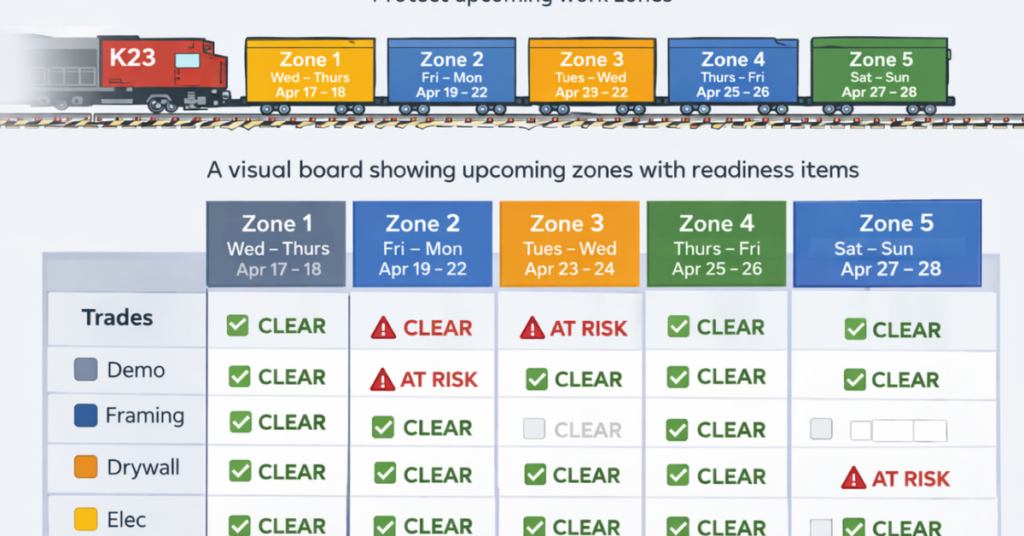
Readiness is not a feeling. It is a checklist of conditions that must be true before a crew enters a zone. Access must be available. Materials must be staged. Information must be complete. Inspections must be planned. Safety and logistics must be coordinated. If any of these are missing, the zone is not ready, even if the schedule says it is.

A strong look ahead process is zone based. Instead of reviewing the entire project at a high level, the team asks a simple question for each trade, what do you need to complete your next two zones inside the beat. This keeps the conversation practical and forces constraints to show up early.

Constraints should become commitments. Someone owns each constraint, with a due date that matches the train. When it is cleared, it is marked cleared. When it is not, it becomes visible risk. This clarity is what reduces surprises. The goal is not to record problems, it is to remove them before they hit production.

Look ahead also protects handoffs. If an upstream trade is trending late, look ahead gives you time to respond, maybe by adding support, adjusting sequence, or using a planned buffer. Waiting until the weekly meeting to discover a missed handoff is too late.

This is where a digital system helps. inTakt can keep constraints tied to zones and trades so the team sees readiness in the same view as the plan. When readiness and schedule are separated, teams miss signals. When they are together, the team acts sooner.

When look ahead is working, the job feels calmer. Not because there are no problems, but because problems are found early, owned, and resolved before they stop the train.
Share

Recent Posts

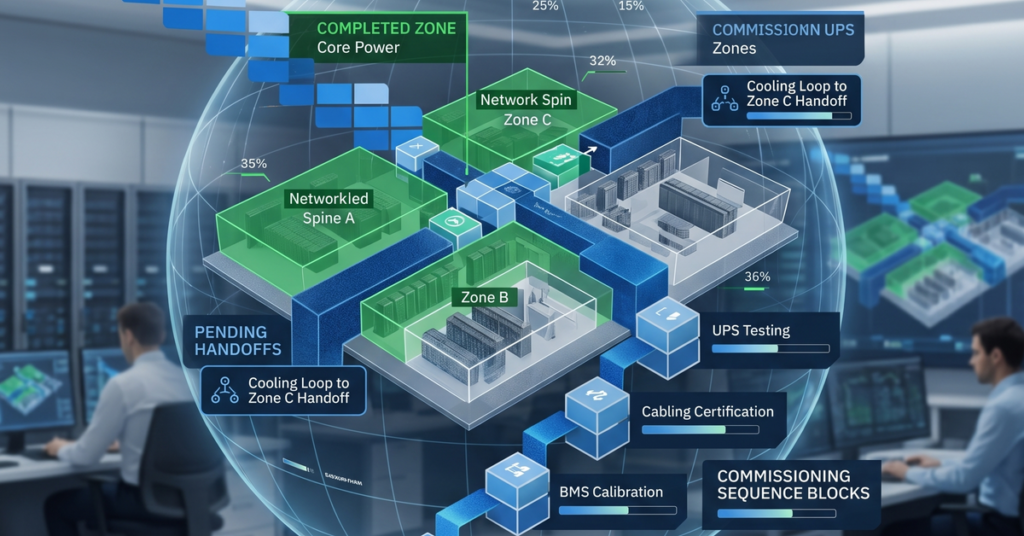
Data center commissioning zone map showing completed zones, pending handoffs, and commissioning sequence blocks

inTakt

June 5, 2026

How Takt Planning Supports Faster Data Center Commissioning

Commissioning is one of the most critical phases of data center construction. It is also one of the most schedule-sensitive. By the time a project reaches commissioning, every upstream delay matters. Incomplete rooms, missing equipment, unfinished systems, failed inspections, or unresolved punch items can all slow down testing and turnover. The problem usually begins earlier. If construction work does not flow properly through the building, commissioning teams inherit the consequences….

inTakt

June 4, 2026

Why Data Center Construction Needs Real-Time Schedule Visibility

Data center projects change quickly. A delivery shifts. A room is not ready. A trade finishes early. A commissioning activity reveals an issue. A constraint appears in a critical area. When that happens, teams need visibility immediately. Traditional schedules often lag behind field reality. By the time updates are collected, reviewed, entered, and redistributed, the jobsite may have already moved on. That delay creates confusion. Some teams work from the old plan. Others work from verbal…

inTakt

June 3, 2026

How Lean Construction Planning Improves Data Center Delivery

Data centers demand predictable delivery. But predictability is difficult when teams rely only on traditional scheduling methods. These projects include complex systems, aggressive deadlines, high-quality expectations, and many specialized trade partners. Every delay creates a chain reaction. Lean construction planning helps teams reduce that uncertainty. Instead of focusing only on task completion, lean planning focuses on workflow reliability. The goal is to reduce waste, improve handoffs,…

More Than Logic. Built for Production.

Traditional CPM tools manage activities and relationships. If you run full Takt, you’ll love it! If you run traditional CPM, you’ll wonder why your software never did this before.